|
|
Hello to my fellow hummingbird lovers,
The next few months will take my hummingbird journey into the Caribbean, with two new destinations and eight species I have never photographed before.
But with every new species photographed, the journey continues to grow beyond the photographs themselves. I am learning more about the habitats these birds depend upon, the threats facing some of them, and how photography can help bring their stories to a much wider audience. |
This September, I will be heading across Puerto Rico in search of five hummingbirds I have yet to photograph:
Antillean Crested Hummingbird (a species I've dreamt about)
Green Mango, endemic to Puerto Rico
Green-throated Carib
Puerto Rican Emerald, endemic to Puerto Rico
Puerto Rican Mango
The Green Mango and Puerto Rican Emerald are especially exciting because they are found nowhere else in the world.
Island endemics have always fascinated me. Their entire global existence can be tied to one island, one mountain range, or one particular type of habitat. Photographing them means traveling to the only place on Earth where that opportunity exists. |
In October, the journey continues to Jamaica in search of three more new hummingbirds:
Black-billed Streamertail
Jamaican Mango
Red-billed Streamertail
All three are endemic to Jamaica.
The Streamertails are among the hummingbirds I am most excited to photograph. The Red-billed Streamertail, famously known as Jamaica's "Doctor Bird," is one of the Caribbean's most recognizable hummingbirds, while the Black-billed Streamertail is restricted to the eastern portion of the island.
Three hummingbirds, all found nowhere else. Hopefully, Jamaica will bring my photographed species total to 254. |
|
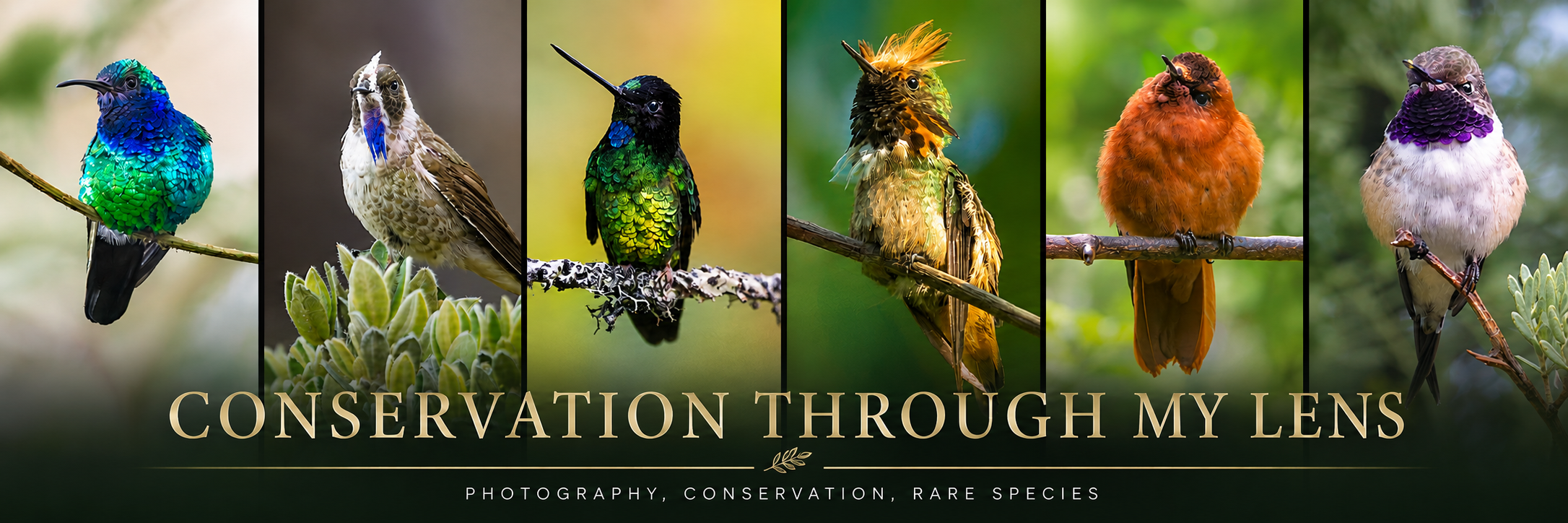
Conservation Through My Lens |
|
As my travels have taken me deeper into the hummingbird world, conservation has become an increasingly important part of the journey.
I recently created a dedicated Hummingbird Conservation section on my website to bring these efforts together in one place. It follows the species I support, conservation projects and partnerships, funding efforts, and updates from work taking place on the ground.
From the Chilean Woodstar and Santa Marta Sabrewing to the Juan Fernández Firecrown, these are no longer simply species I have photographed. They are hummingbirds whose stories I want to continue helping tell. |
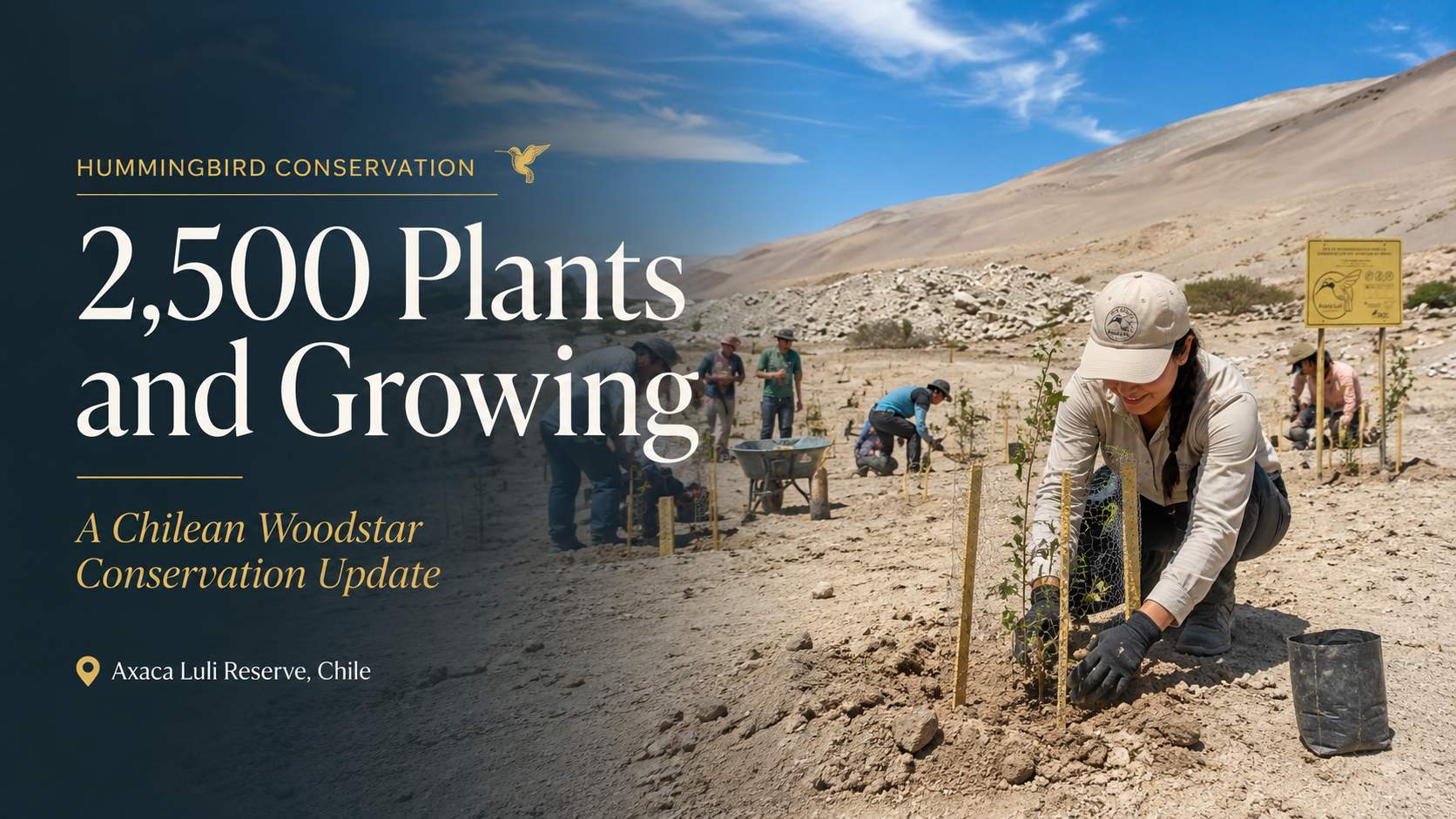
2,500 Plants and Growing for the Chilean Woodstar |
The Critically Endangered Chilean Woodstar was the first hummingbird I ever asked others to help me support, and today that support is helping restore its habitat in northern Chile. More than 2,500 plants are now surviving at the Axaca Luli Reserve, creating new feeding and breeding habitat for a species with fewer than 500 individuals remaining. |
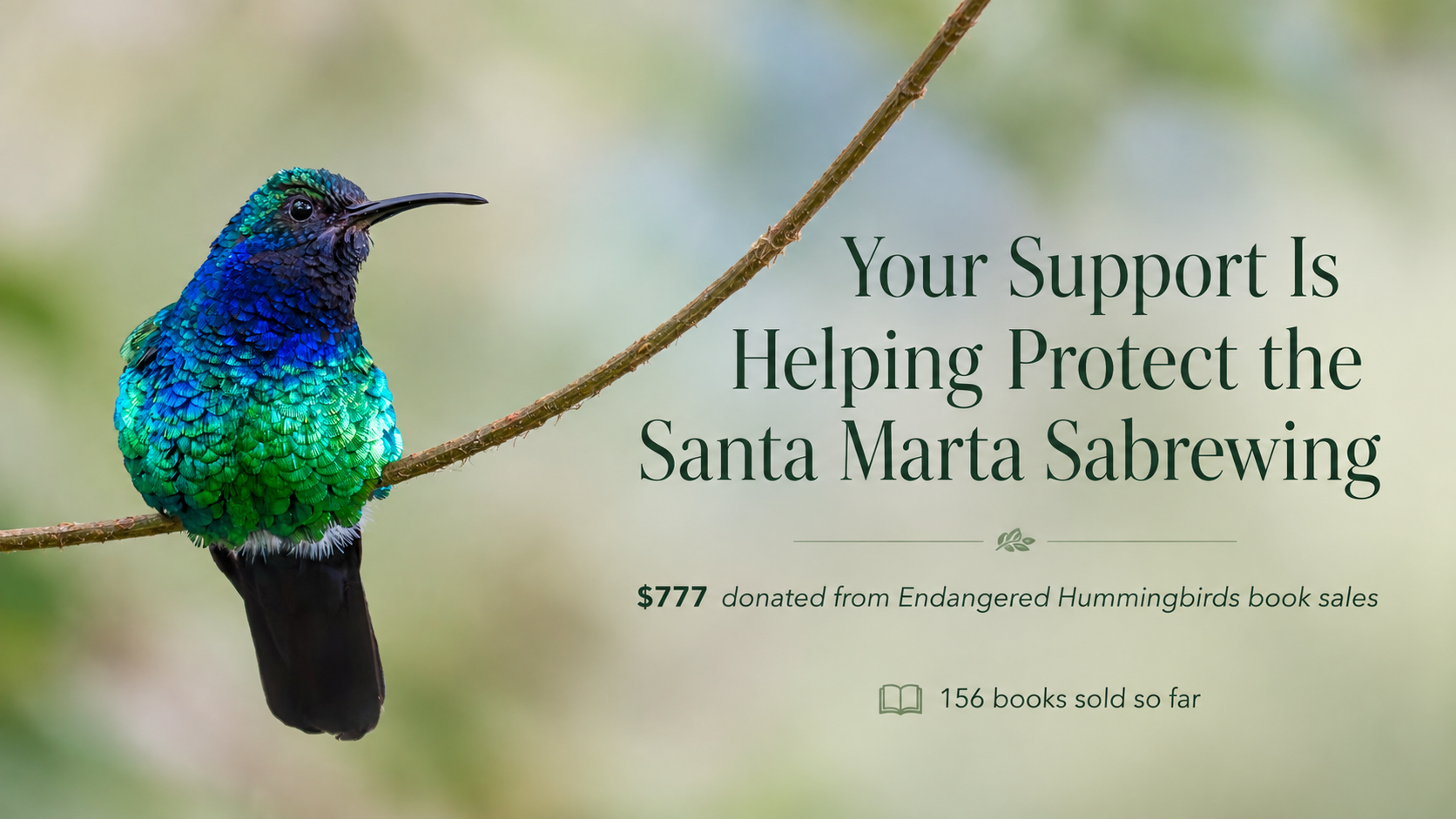
Your Support Is Helping Protect the Santa Marta Sabrewing |
A major new conservation effort is taking shape for the Critically Endangered Santa Marta Sabrewing, believed to number fewer than 50 individuals. American Bird Conservancy and its Colombian partner SELVA have developed a proposal focused on better understanding the species, working with local communities, and protecting and restoring the habitat it depends upon. Through proceeds from Endangered Hummingbirds: Seeing the Crisis Through My Lens (thank you to all who have purchased your copy) and the generosity of additional donors, the International Hummingbird Society contributed $7,777 toward this effort. It is an encouraging first step for one of the rarest hummingbirds on Earth, and there is much more to the story.
I have had the extraordinary privilege of photographing this species and taking video footage. Seeing this bird in the wild changed those population numbers from statistics on a page into something very real for me. |
|
|
|
Building a Better Count for the Juan Fernández Firecrown |
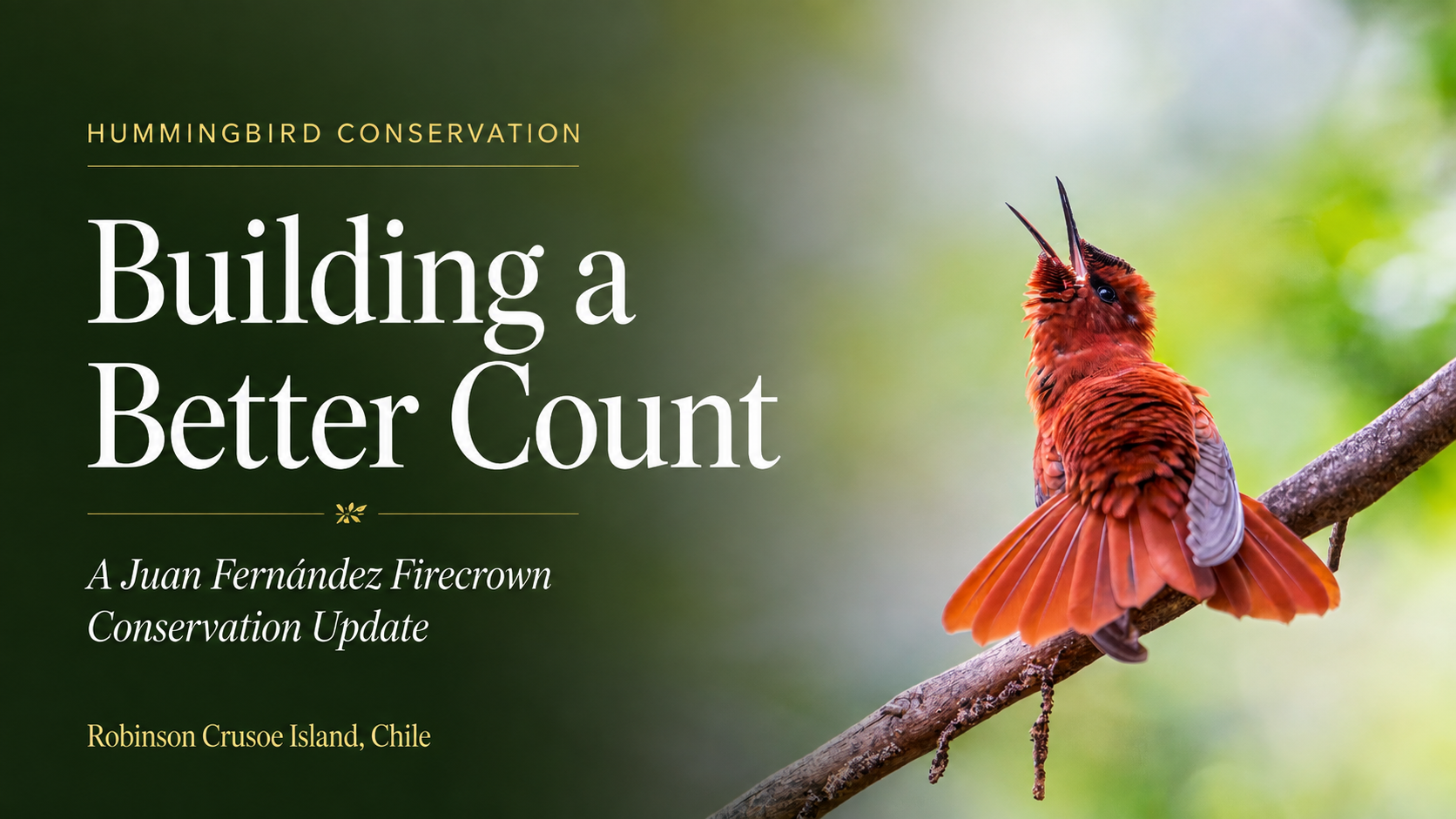
There is encouraging progress for the Juan Fernández Firecrown, found only on Robinson Crusoe Island, Chile. The International Hummingbird Society has provided $4,000 for a new pilot monitoring project designed to develop a reliable way to estimate the population and track whether it is stable, increasing, or declining. With the last population estimate dating back to 2015, this work could provide an important foundation for long-term monitoring and future conservation decisions for this remarkable island endemic. |
Summer Hummerz at Ventura Botanical Gardens
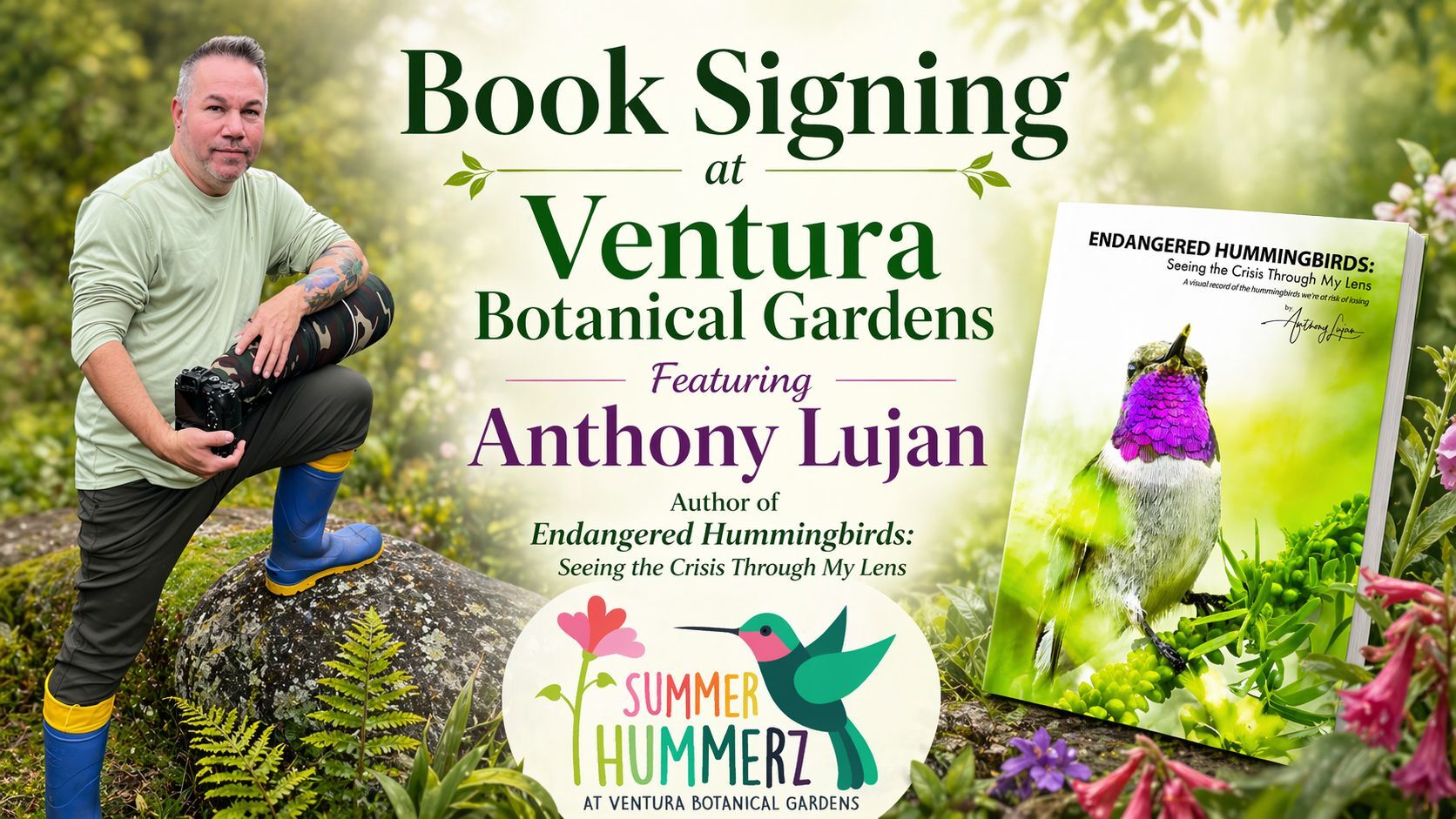
In July, I spent two days at Ventura Botanical Gardens as part of its Summer Hummerz celebration.
Beyond signing books and talking with visitors, it was an honor to collaborate with the Gardens to incorporate my photography into an educational experience exploring the extraordinary diversity of hummingbirds.
My photographs helped illustrate just how different hummingbirds can be in their shapes, colors, sizes, bills, tails, feathers, and adaptations, while also creating another opportunity to talk about the conservation needs of these remarkable birds.
I left Ventura incredibly grateful for everyone who stopped to talk, purchased a book, shared a hummingbird story, or simply wanted to learn more. |
Lily's in Idyllwild
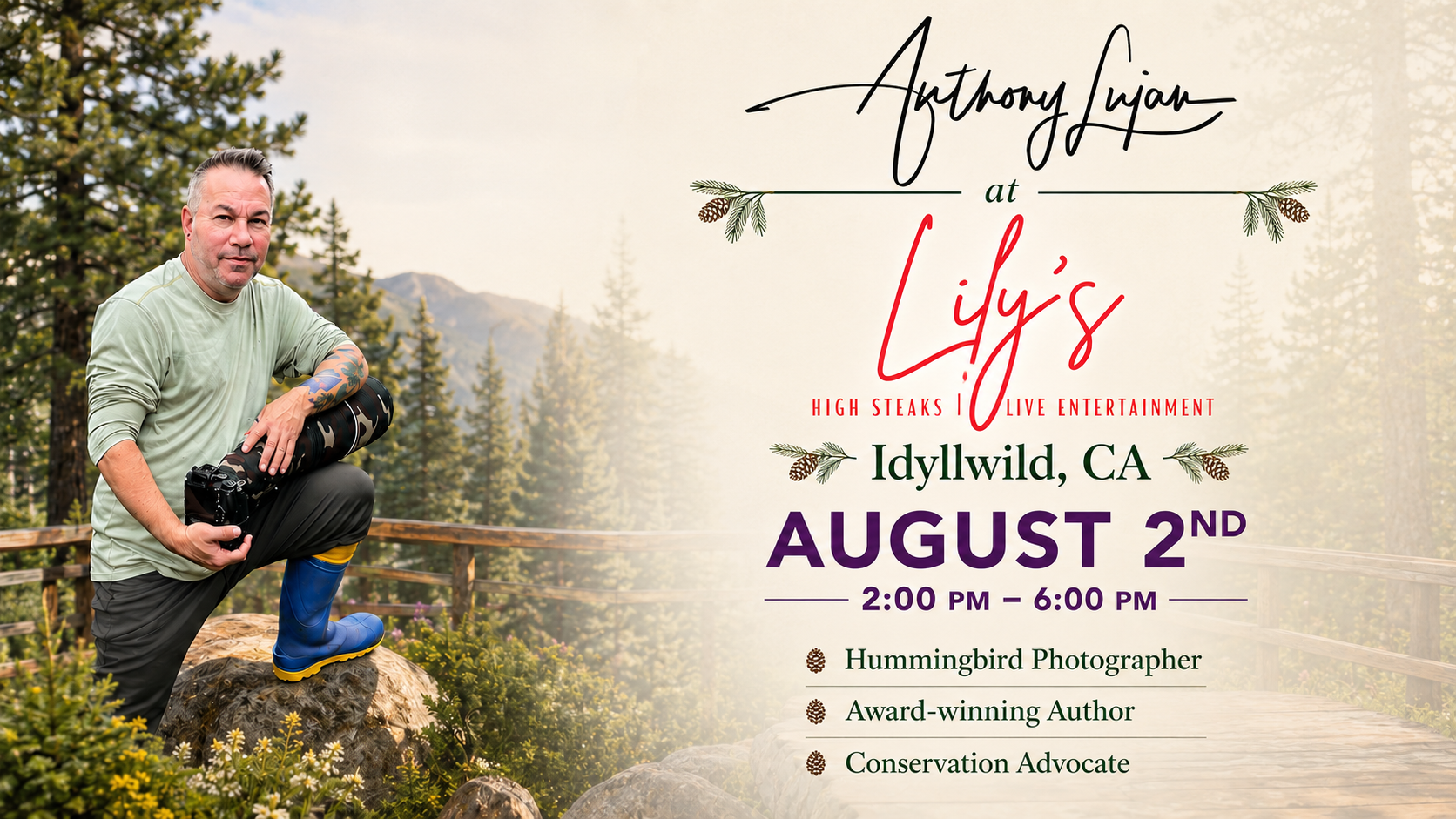
In August, I joined fellow artists from the Hemet Valley Art Association at Lily's in Idyllwild for an afternoon bringing together art, community, nature, and conservation.
Events like this have become about much more than displaying photographs or signing books.
They give me an opportunity to talk one-on-one with people about hummingbirds, hear their own stories and experiences, and introduce people to species and conservation challenges they may never have encountered before.
Every conversation creates another connection. |
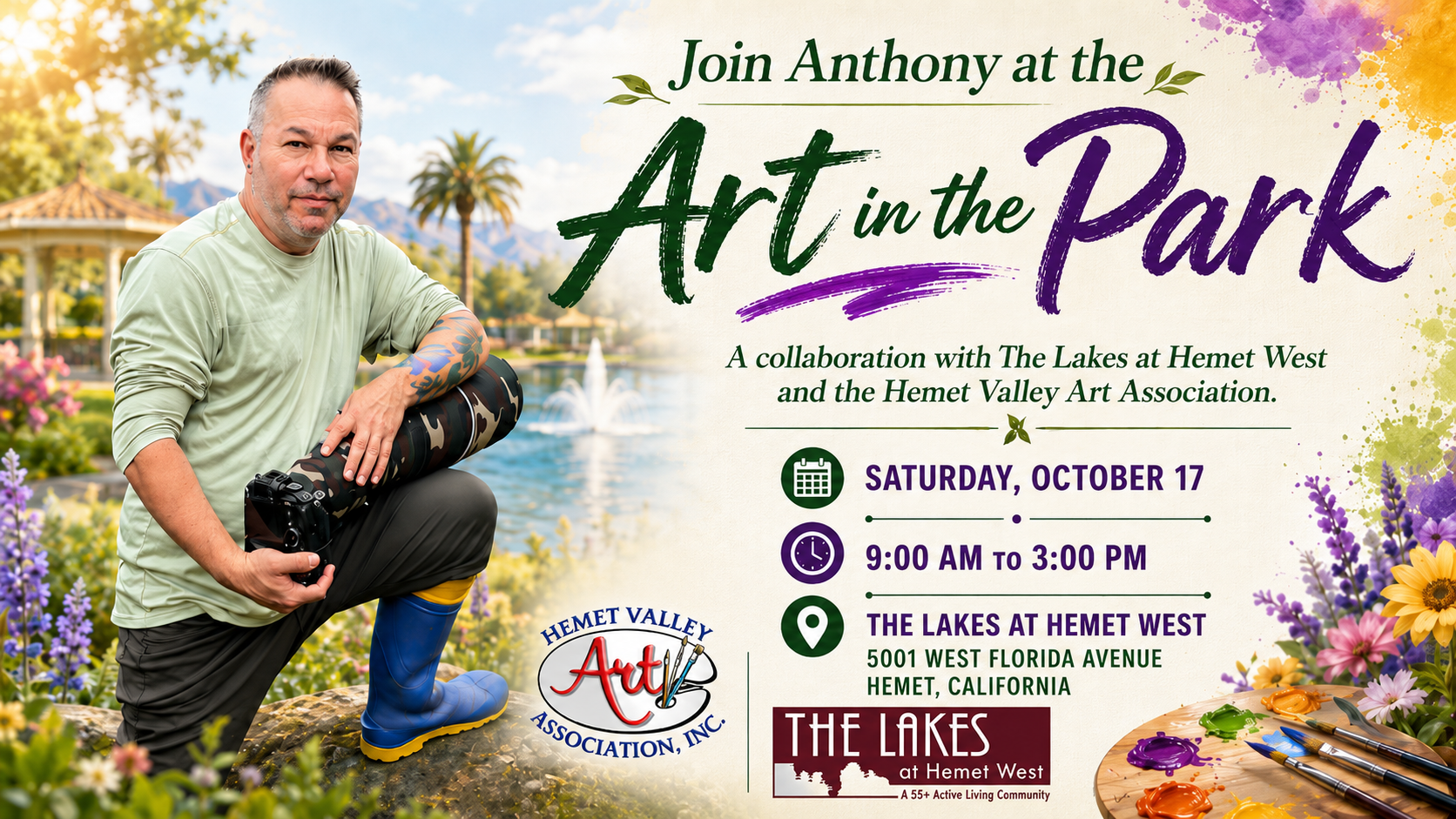
And on Saturday, October 17, I’ll be part of Art in the Park at The Lakes at Hemet West, where I’ll have signed books, hummingbird photography, enamel pins, note cards, journals, and other hummingbird-inspired gifts available.
Come by and say hello! |
|
Photographing every hummingbird species in the Americas remains an important part of my journey.
Over the last decade, I have photographed 246 species, about 67 percent of all recognized hummingbirds. Puerto Rico and Jamaica represent the next eight opportunities to move that journey forward. At the same time, I remain especially focused on reaching the final at-risk hummingbirds I have yet to photograph, species classified by the IUCN as Critically Endangered, Endangered, Vulnerable, or Near Threatened.
Many of these hummingbirds survive in remote and difficult-to-access regions across the Americas. Reaching them can require specialized local guides, permits, transportation, lodging, and extensive on-the-ground logistics.
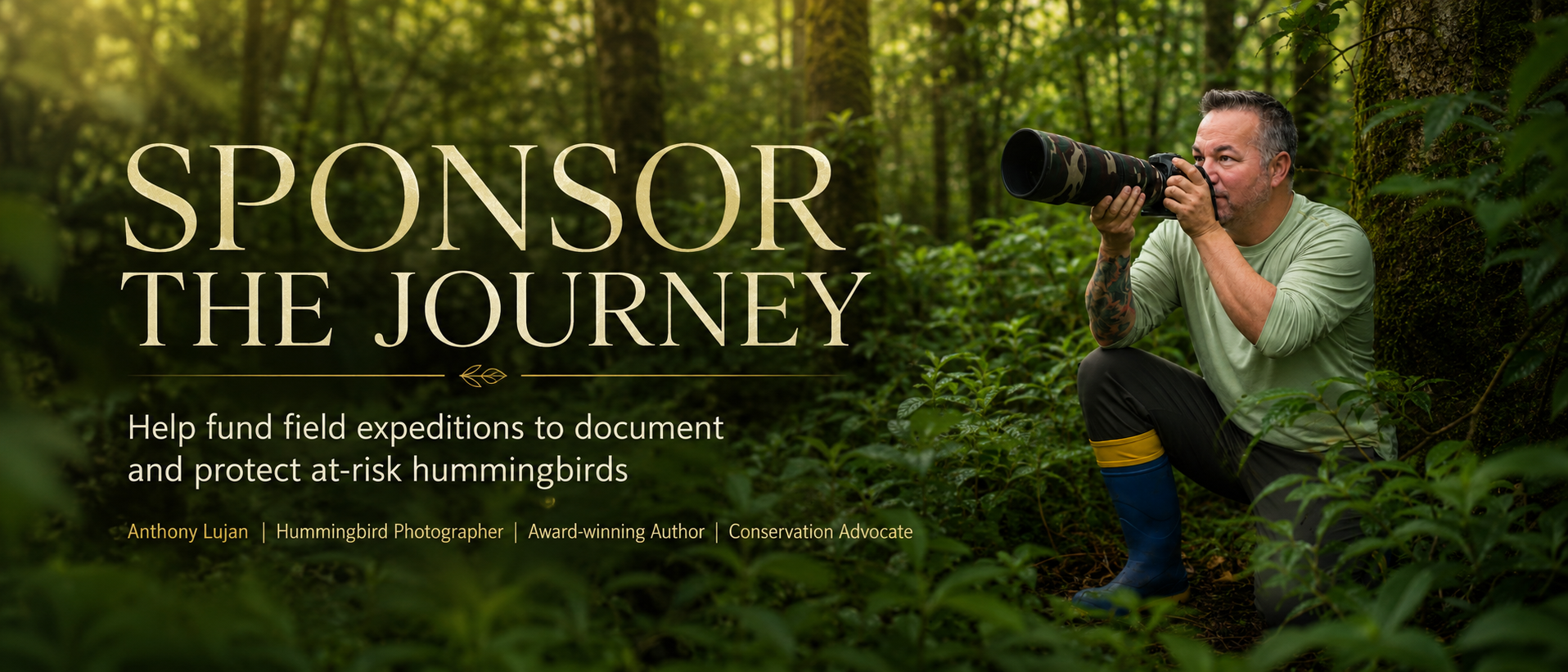
Sponsorship helps make those expeditions possible.
It supports the fieldwork required for me to reach and document these species through photography and video, learn about the habitats they depend upon, and bring their stories to people who may never have the opportunity to see them in the wild.
The Santa Marta Sabrewing is a perfect example of why that matters. I first traveled into Colombia's Sierra Nevada de Santa Marta to photograph one of the rarest hummingbirds on Earth. That experience became part of my photography, my book, my conservation advocacy, and ultimately a larger effort that has now helped direct thousands of dollars toward protecting the species.
That is what I hope each expedition can become.
A photograph is the beginning. What we do with it afterward can have a much greater impact.
If you believe in what I am working to accomplish and would like to help me reach the next hummingbird whose story needs to be told, I invite you to explore the sponsorship opportunities available.
Every level of support helps move the journey forward. |
Thank you for reading, for caring about hummingbirds, and for being part of this work. Every time you share a story, attend an event, or bring a book into your home, you help keep these hummingbird lives in view. With gratitude, Anthony |
|
Anthony Lujan, EO Physical Return Address, 86-90 Paul Street, London, EC2A 4NE, United Kingdom
If you no longer wish to receive these emails, you can unsubscribe here. |
|
|
|