Dear Reader, Welcome to spooky season! And what better to celebrate than with some chilling new reads? Occasionally, the Readers' News may be so feature packed that some email clients cut it off. Don't worry! You can always read the Readers' News online here. |
|
|
Writing Fiction Based on Real Crime Justine Gilbert
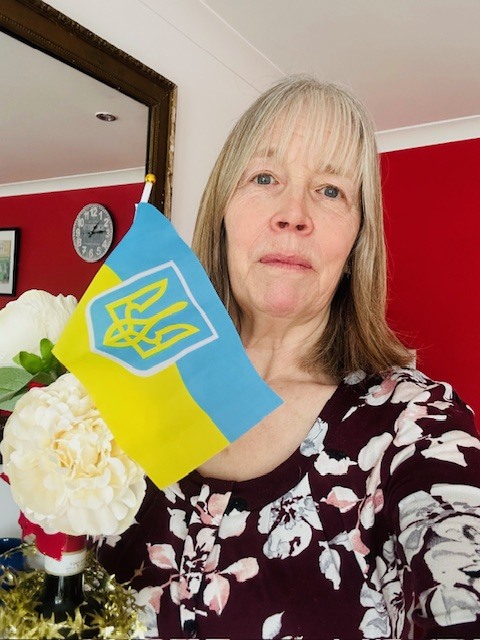
Recently, I was thrilled to find that my novel, The Anna Puzzle, was a finalist in the Page Turner Awards. (Winners yet to be announced). The subject matter of this novel, involving crime, murder and espionage, and the invasion of Ukraine, is particularly dear to my heart as it was written with thoughts of the Ukrainian families who had stayed with me over the past four years.
When writing The Anna Puzzle, I was determined to get across the message that the Cold War never ceased, but simply went underground. Litvinenko, the Scripols, Navalny--these stories entered the news and people were rightly appalled at the Russian method of wanton poisoning used abroad, but they didn’t see the wider historical picture. Today, anyone who follows the invasion of Ukraine in the media knows that Putin, a man in power for almost all of the thirty years of ‘peace’ between Russia and Europe, drives the agenda. Russia and Eastern Europe could be part of a prosperous cultural movement, instead of our current need to spend money on drones and the military for defence against an increasing threat.
From the start, I decided my novel had to be framed as a love story, because in times of war, hot or cold, it is love that redeems. Without love, we can only dwell on political failures.
Therefore, it means a great deal to me that The Anna Puzzle is recognised. I’ve given a talk at the Beany Library in Canterbury to a Ukrainian book group, and the Ukrainians were so pleased that someone had written a novel about the beginning of the invasion. One thing I explained to them was how hard it was to find an ending. Each month, I looked desperately for news that suggested the conflict would be sorted. We know that hasn’t happened, but at least the love story allows for hope.
Read more about Justine and her books here. |
|
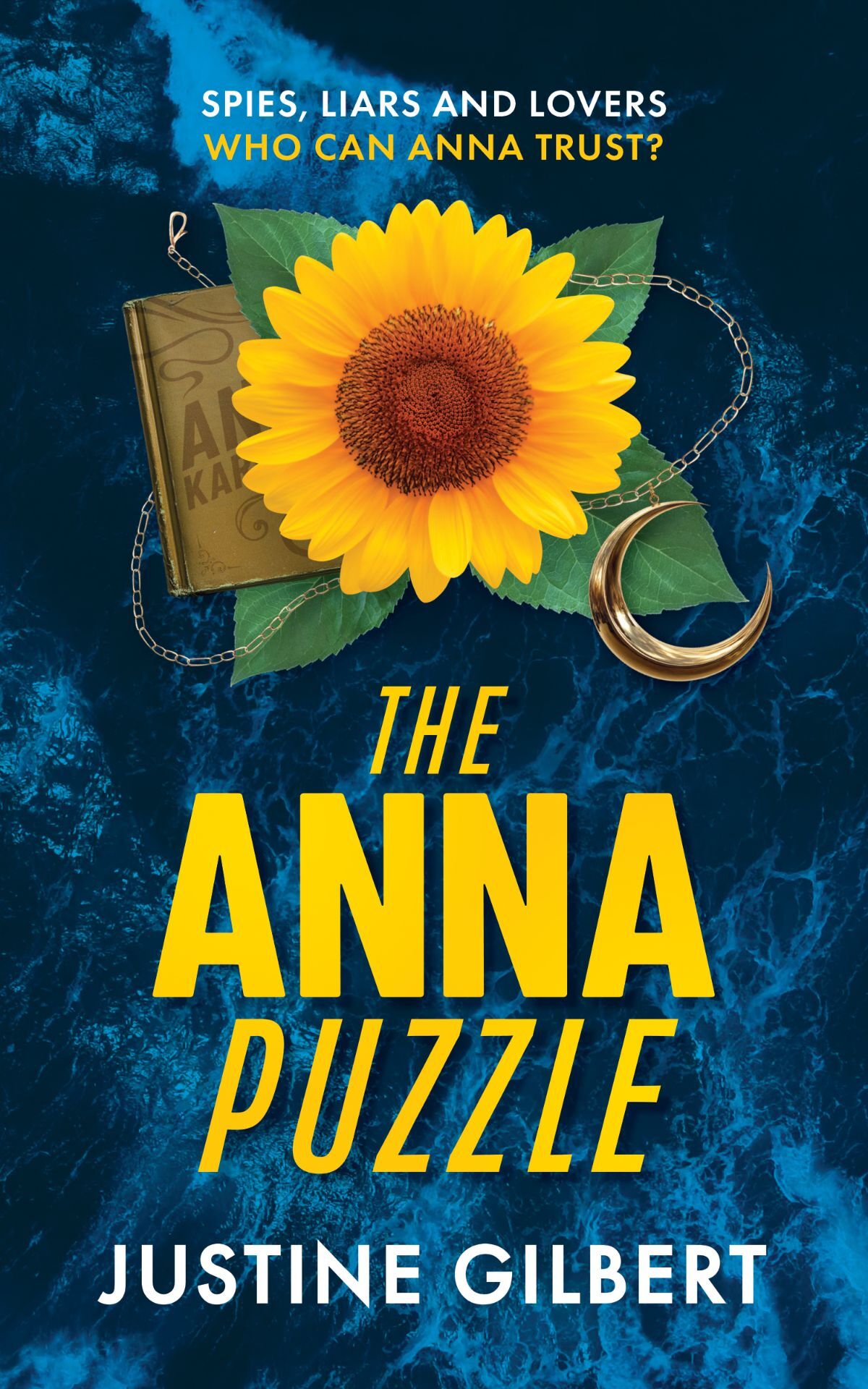
Spies, liars and lovers: from Berlin at the end of the Cold War, to Ukraine at the beginning of a new war, who can Anna trust? The Anna Puzzle is available now from Small Dog Publishing, and you can purchase it here. |
|
Profan-o-Meter: Mild (The odd naughty word here and there) |
|
|
Platelet count: Eek! (Nothing a plaster couldn't fix) |
|
|
|

|

|
|
|
|
American Mobster Inspires New Book on the Border Reivers Jon Tait
A chat with a famous former New York gangster inspired Jon Tait's upcoming book, The Border Mafia. Here's how.
When journalist Jon Tait drew a comparison between the Reivers and the Mafia during an interview, it became the spark to explore those parallels further.
'While I was a university student there was an airport heist at Heathrow, and I managed to secure a brief interview with Henry Hill about it.'
Henry Hill's life was the basis for the Martin Scorsese movie Goodfellas. He was a soldier in the Lucchese crime family and part of the gang that pulled off the Lufthansa Heist at JFK airport in 1978.
'He told me he was certain it had been an inside job and the rush that the men felt after pulling it off would have to be shared with someone, and that would catch them out eventually', said Tait.
'I mentioned where I was from and about the Reivers, and he agreed that they sounded just like his people in Cosa Nostra'.
The Border Mafia digs into the nepotism, corruption and intimidation faced by the border officials and the organised criminal networks that the Reivers established between themselves while exploiting the border line to their advantage in their efforts to evade justice.
'The Reivers were long-term career criminals and you pick them up in the records over years to tell their stories', Tait continued.
'I’m an insider – I know the people of the borders, I belong here. I know people that are on the same farms now as their ancestors were back then. I don’t have to explore the psyche or the personalities; I’ve known them all my life. They’re in my family on both sides, they’re my wife’s family, they’re people I understand'.
'I like to look at my work as a true crime chronicle about the organised crime that was once endemic in the largely rural area from the 13th to the 17th century'.
Read more about Jon and his work here.
|
|
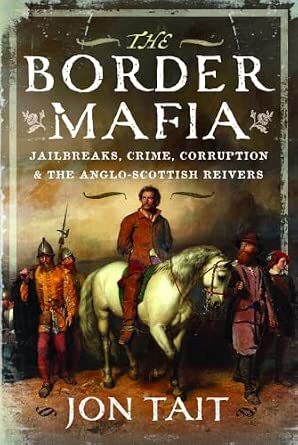
The Border Mafia is coming on 30 October from Pen & Sword Press. You can pre-order it here. |
|
Profan-o-Meter: Harmless (As clean as the driven snow) |
|
|
Platelet count: Eek! (Nothing a plaster couldn't fix) |
|
|
|
The Authors’ Licensing and Collecting Society (ALCS) is a not-for-profit organisation started by writers for the benefit of all types of writers. Owned by its members, ALCS collects money due for secondary uses of writers’ work. It is designed to support authors and their creativity; ensure they receive fair payment and see their rights are respected. It promotes and teaches the principles of copyright and campaigns for a fair deal. It represents over 120,000 members, and since 1977 has paid over £650 million to writers. |
|
|

|
Can You Guess Who? (Answers will be shared at the end)
Author 1: Author 1 used to watch horse races on monitors and type out the results for BBC Radio, although they knew next to nothing about horse racing.
Author 2: Author 2 once won (as a cox) the Far Eastern Amateur Rowing Association championships, after which (as a cox) they were thrown in a crocodile infested river.
Author 3: As a teenager in the 1970’s, Author 4 went to Germany for three months to sell encyclopaedias door to door to the families of British soldiers living in army residences.
Author 4: When Author 6 was a young child in the 1970s, a neighbour caught them putting their pet tortoise towards their mouth. When they asked what Author 6 was doing, Author 6 replied: 'I've found a pie with legs!' They haven't changed. |
|
|
|
Picture This...If You Can Susan Brownrigg
Think of a cat. What colour is it? Does it have long or short fur? Does it have a collar? Perhaps you see it in a basket? In a garden? On a windowsill? Is the picture clear or fuzzy?
When I try to picture a cat, I see nothing.
I can’t picture anything! Not even the faces of my family and closest friends. I have aphantasia – the inability to voluntarily create mental images.
When I read a book I see only the words on the page – I don’t see pictures in my mind. My mum, on the other hand, says when she reads it’s like watching a film. Friends describe the same. It’s a concept that feels completely alien to my experience.
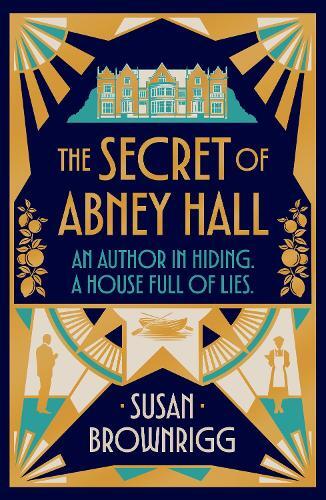
My adult debut novel, The Secret of Abney Hall, is a historical whodunit is set in December 1926 following Agatha Christie’s 11-day disappearance. The story takes place in her sister Madge Watts’s house, in Cheadle, near Manchester. Abney Hall still exists. It was in the Watts family for four generations before being bought by the local council who used it as the town hall. Today it has been divided up into office spaces -- but fortunately the opulence remains.
Agatha jokingly described the decoration as ‘sort of Gothic monstrosity, best Victorian lavatory.’ It was certainly crammed with furniture, paintings and objets d’art. A stuffed lion at the bottom of the stairs particularly captured my imagination.
I arranged a guided tour with the custodians of Abney Hall. It was brilliant and a little overwhelming to be following in Agatha’s footsteps. The house is a real maze. It was the inspiration for several country homes in Agatha’s books including those in The Secret of Chimneys, 4:50 to Paddington and Hercule Poirot’s Christmas. I sketched, photographed and jotted down as much detail as I could.
The grounds of Abney Hall are now a public park. I tried to work out where the secret tunnel under the driveway would be, where the boathouse was once located, and listened to the rush of the man-made waterfall. I spotted the Watts’s dogs graveyard and a Cedar of Lebanon tree that went on to feature in my book. I also visited The Old Swan Inn in Harrogate (formerly Swan Hydropathic Hotel) where Agatha retreated following the breakdown of her first marriage. I was able to visit the lounge where she was reunited with her husband and sister -- as well as enjoying a delicious afternoon tea. A reward for all my hard work and one I remember very fondly even if I can’t picture it!
Aphantasia is thought to affect about 1 in 25 people according to Aphantasia Network. You can find out more at aphantasia.com
Learn more about Susan and her books here. |
|
The Secret of Abney Hall is available now from Fox & Ink Books. You can get your copy here. |
|
|
|

|
|
|
|
When and How do you End a Series? Bryan J. Mason
So, you’ve established your characters, including the setting, time, and place. And you have got several exciting plotlines up your sleeve; readers seem to like the books and there are steady sales.
But there is a doubt in your mind.
When should you end a series? Caimh McDonnell has already shown that a trilogy isn’t limited to three books, with his Dublin Trilogy already notching up nine books and counting. Conan Doyle’s Sherlock Holmes had his ‘Final Problem’ at the Reichenbach Falls only to emerge apparently unscathed some years later to continue his investigations. However, I have decided that the third book in my black comedy crime series set in Northern Ireland will be the last.
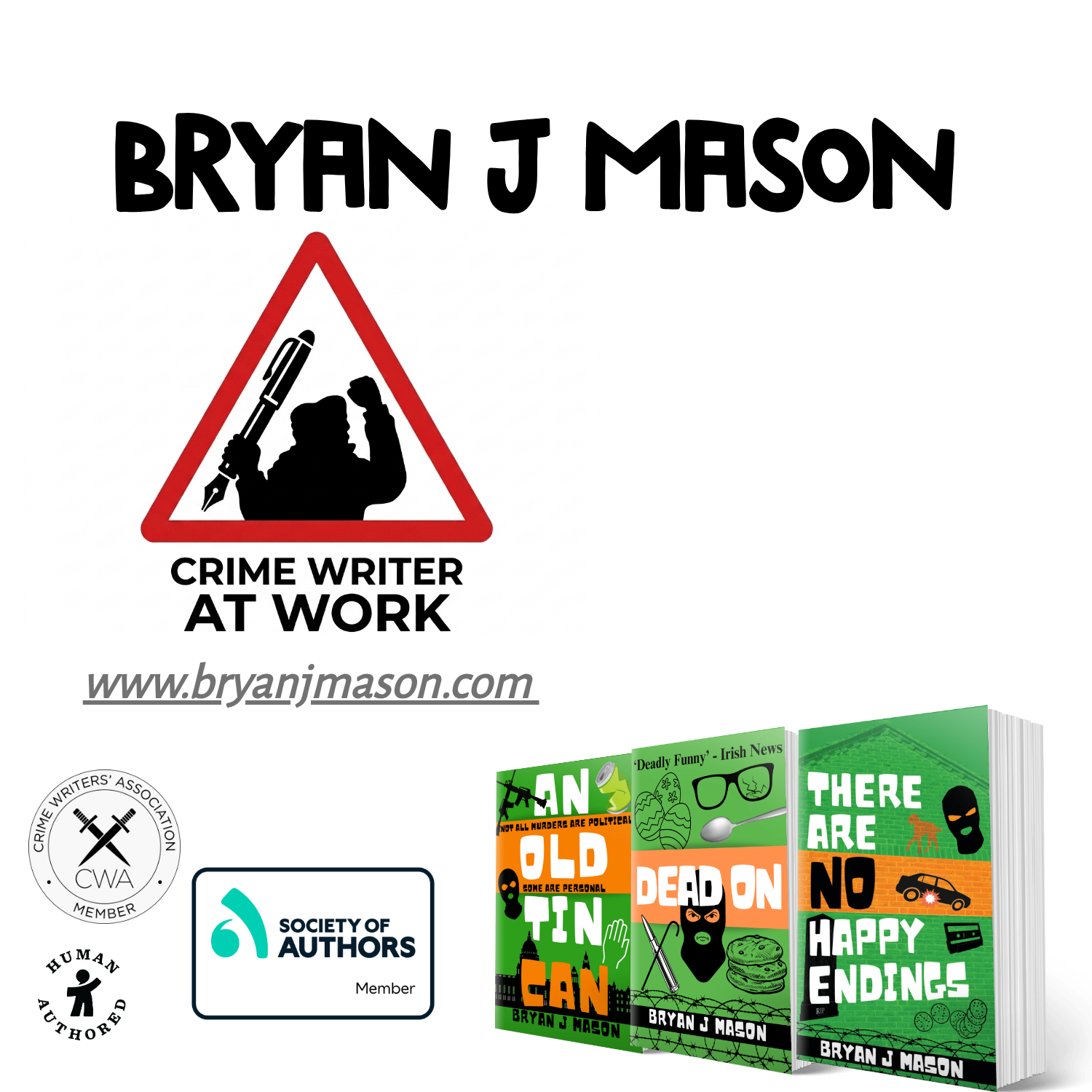
When I started in An Old Tin Can with a story about how an English, Jewish, Detective Harry Burnard, ended up in Belfast at the height of the Troubles, I never intended to write a series. It was a standalone book, even though I left the ending deliberately ambiguous. However, as fellow writers will recognise, the characters have a habit of taking over, and when I was asked to write a follow up, I couldn’t resist them. The narrative began in 1989, then 1990 for Dead On and There Are No Happy Endings ends in November 1991.
I enjoy mixing fiction alongside some of the real and terrible events of the time, with themes of identity, collusion, loyalty and betrayal. The storyline, including key members of both paramilitary factions and a notorious double agent recruited by the British state, had developed to a stage where something big had to happen.
Harry Burnard’s team in the RUC, a ragtag unit of misfits, rejects and damaged souls, has survived bombs, betrayal, biscuits, and one another. Readers of the first two novels will know that Harry himself has his own identity problems, which have brought him into even greater danger. But in the final novel, published on 1 October, there is a resolution. Not that it means everyone has a happy ending.
The series could easily run on with some new characters and storylines, but I feel satisfied that I have told a complete story with all loose ends tied up neatly at the end.
And this has now allowed me to begin a new project and start researching and writing another series, set in an entirely different world. I hope to have the first of my black comedy Victorian undertakers’ stories, Underwood & Niece, to be published next year.
In the meantime, there is one final case for Harry & The Squad, with what I hope readers will find a thrilling and memorable conclusion. Because, one way or another, this will be their last case. Read more about Bryan and his books here. |
|
There are No Happy Endings is available now from Black Comedy Crime Press, and you can score your copy here. |
|
Profan-o-Meter: Mild (The odd naughty word here and there) |
|
|
Platelet count: Ugh! (Some parts get pretty squishy) |
|
|
|
|
|
|
|
|
|
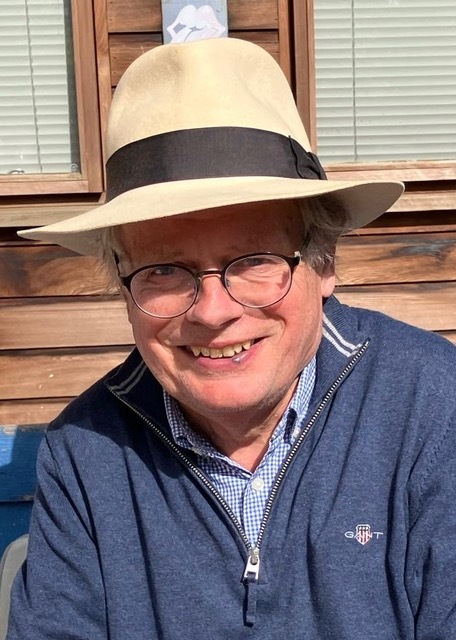
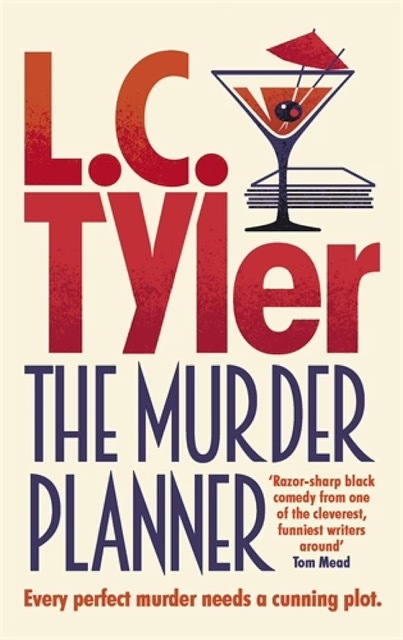
The Murder Planner LC Tyler
If you’re planning a wedding, you might need a wedding planner. If you’re planning your retirement you might need a financial planner. But what if you’re planning a murder? Every bit as tricky. Every bit as awkward if you get it wrong. Once that thought had occurred to me, it was apparent I’d hit a gap in the market and I clearly had two choices. I could set up a new service myself and advertise it on Facebook. Or I could write about somebody who’d done it.
So, my next novel, The Murder Planner, was born. All I needed now was a few characters. What sort of person might run a murder planning service? Clearly somebody with access to people who knew all about homicide and could write decent English. People able to draw a map or two of the crime scene. People who were earning less from their advances and royalties than they needed to pay the rent.
Did I know any people like that?
Thus I ended up with Sable Knight as my main protagonist - the editor in chief and sole proprietor of Day and Knight, a cash-strapped independent publisher with quite a few crime writers on their books. And Derek, a writer who is struggling to get his work published for many good and valid reasons, but who does come up with very good plots. And “Mrs Smith”, who has a husband who has (she says) done more than enough to justify being murdered.
I was aware that I was entering morally dubious territory here but, as Sable points out, she doesn’t murder anyone herself (and she’ll sue the stuffing out of you if you claim she has). She just provides her clients with plots they could use to write a crime novel -- or whatever else they want to do with them. She’s providing an essential service, like an ambulance driver or a Starbucks barista.
Then suddenly it all starts to fall apart. She discovers she has a client who seems incapable of following the simplest instructions. And information about the service seems somehow to have got into the wrong hands. At which point, I realised it could all get very messy indeed.
Read more about LC and his books here. |
|
The Murder Planner is coming on 22 October from Allison & Busby. You can pre-order it here. |
|
Profan-o-Meter: Mild (The odd naughty word here and there) |
|
|
Platelet count: Eek! (Nothing a plaster couldn’t fix) |
|
|
|
Do You Have a Story to Tell? Two writing contests are now open, and both have fabulous prizes!
|
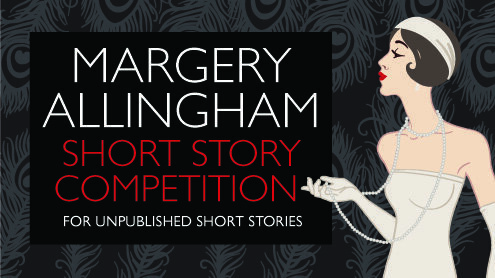
The Margery Allingham Short Mystery Competition awards the best short mystery -- 3,500 words or less -- that fulfills Margery Allingham's definition of mystery. That is: The Mystery remains box-shaped, at once a prison and a refuge. Its four walls are, roughly, a Crime, a Mystery, an Enquiry and a Conclusion with an Element of Satisfaction in it.The contest is open to both published and unpublished authors, however the story itself must be unpublished (and written in English). Prizes include £500 cash and one year's membership in the Crime Writers' Association. Deadline: 29 January 2027. You can find more information here. |
|
Enter the Emerging Author Dagger!
The Emerging Author Dagger is a contest for unpublished, unagented writers currently working on a crime novel. Sponsored by Fiction Feedback Literary Consultancy, the contest judges the first 3,000 words of a crime novel and a 1,500 word synopsis. The deadline is 29 January 2027. The prize is £500 cash. In addition, shortlisted entries are sent to agents and publishers who have asked to see them. For more information, see this page. |
The Dagger in the Library is Now Open for Submissions
The Dagger in the Library is an award for authors whose books are popular with library readers, and who actively support libraries. It's also the only CWA Dagger nominated by YOU, the reader! Between now and 6 December 2026, please submit the name of your favourite author to the staff of your local library. And the libraries will do the rest! Read more about DITL here. |
The CWA Crime Writers' Clinics are Back!
The CWA is proud to offer its autumn Crime Writers' Clinics -- workshops to help writers, aspiring writers, and anyone else who might be interested! Topics include Social Media for Authors, Author Newsletters, the Agent Process, and more! Clinics are £10 for the general public and free for CWA members. Read more here. |
|
We asked this month's authors, what's the book that's so great you wish you had written it? Here are their answers.
Bryan J. Mason: Where She Lies by Caro Ramsay Justine Gilbert: The Devil’s Feather by Minette Walters Jon Tait: Gomorrah by Roberto Saviano LC Tyler: Bloodshed in the Bookshop by Simon Brett
|

|
|
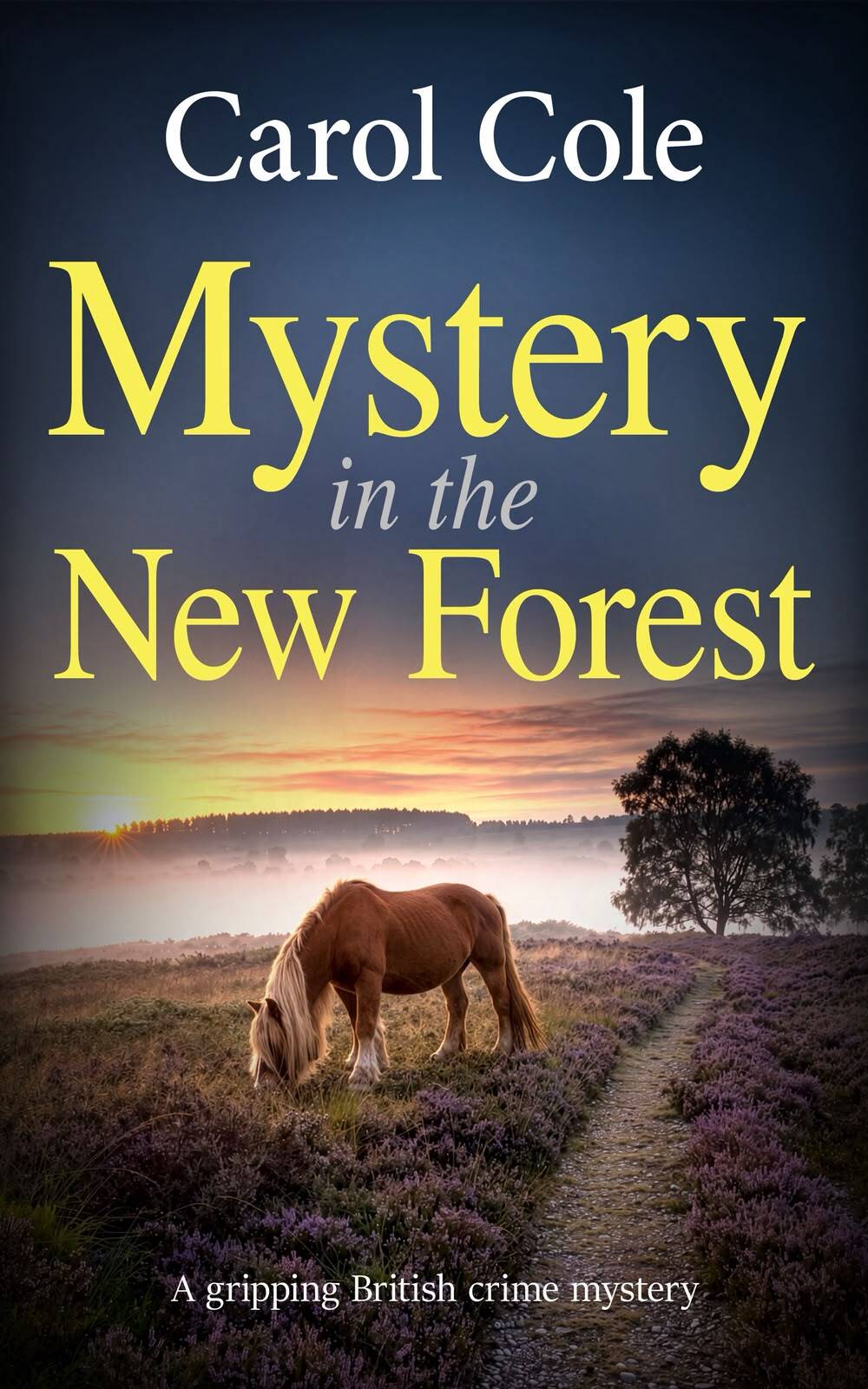
Mystery in the New Forest by Carol Cole
Take a respected photographer with a younger and beautiful wife, a retired military man, an estate agent and an environmentalist. Put them in a frying pan, turn up the heat and you will find you have fried more than just fish.
The stunning landscape provides a fitting backdrop for Mystery in the New Forest. It is immersive and a unique environment where wild ponies roam free in this unfenced wilderness. Add Callum, an inspector, a private man who is new to the area, and afraid of horses. Team him up with Daisy, a young sergeant who loves all things ‘animal’. She is good at her job because she is nosey, but he does not appreciate being the focus of her interest.
Set in real time and place, this is a book where you can join the team in trying to find a murderer. Every clue the detectives uncover is there on the page for the reader to see. Pit your wits against a killer, join the team in solving the crime.
Mystery in the New Forest is available now from The Book Folks. You can purchase it here.
|
|
Can You Guess Who? Answers
Author 1: Bryan J. Mason
Author 2: LC Tyler
Author 3: Justine Gilbert
Author 4: Jon Tait
|
|
|