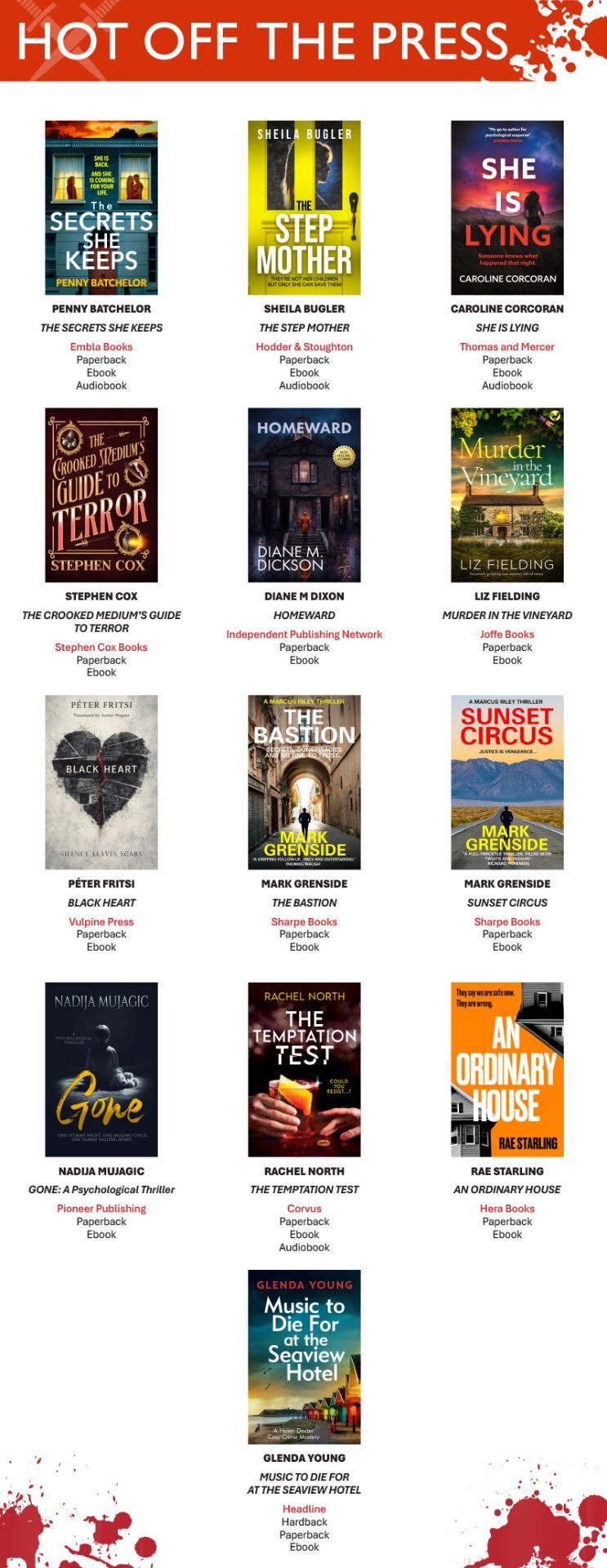
Dear Reader, Did you know that more mysteries and thrillers are released in September than in any other month? We're lucky enough to be bringing some of the best in new crime fiction to you this September, so grab your tastiest autumnal beverage and prepare to find your new favourite read. Occasionally, the Readers' News may be so feature packed that some email clients cut it off. Don't worry! You can always read the Readers' News online here. |
|

|
Inspector Chard Versus the Unknown Leslie Scase
When I started to plan the fifth Inspector Chard stand-alone mystery, it was always going to feature Queen Victoria’s Jubilee of 1897. As my novels are mainly set in South Wales it would however sit in the background.
I was looking for something else to take centre stage, when I thought of the Victorians’ interest in the paranormal. Several new characters quickly took shape in my mind and the thought of pitting the pragmatic Chard against a world of psychics, fortune-tellers and neo-Druids seemed delightful.
It did mean a fair bit of research into the Victorian view of the supernatural and it proved to be fascinating. Folklore had been there at the beginning of the age of course. Tales of warning, morality and pure entertainment whether it be Barghests, Kelpies, Leprechauns or the Hounds of Annwn for example were present throughout the country.
The Christian religion also brought angels, demons and the Holy Spirit. We live in a modern world of agnosticism but to many Victorians the connection with the afterlife was fact, not fiction.
The Victorian Age brought new thinking through science. The era saw the discovery of electromagnetism, advances in electricity and of course the phonograph. Marconi’s radio waves were believed to have traveled across the ether – some miraculous matter yet to be discovered and properly understood. Was this the method through which spirits communicated they wondered?
Literature played its part and Pagan Rite mentions the publication of Bram Stoker’s Dracula. But he wasn’t the first ‘popular’ vampire. Lord Varney was there fifty years or so earlier. Other ‘penny dreadful’ supernatural characters also thrilled, none more so than the metal-clawed Spring-Heeled Jack.
Empire brought us beliefs from foreign lands and Neo-Druidism brought them from the past. Spiritualism also took hold and was taken seriously by scientists to a degree. Fraud was however, commonplace and many fake mediums were uncovered by the likes of Arthur Conan Doyle who sincerely wanted to believe in their abilities.
Not all mediums were proven to have faked their powers and given the work of modern theoretical physicists in respect of quantum physics and the multiverse theory, perhaps we should have an open mind. Especially since around 95 per cent mass energy of the universe consists of dark matter/ dark energy which we don’t understand.
Inspector Chard does maintain his scepticism though. In Pagan Rite he has a serial killer to expose and fear of the unknown is not going to get in his way!
Read more about Leslie and his books here. |
|
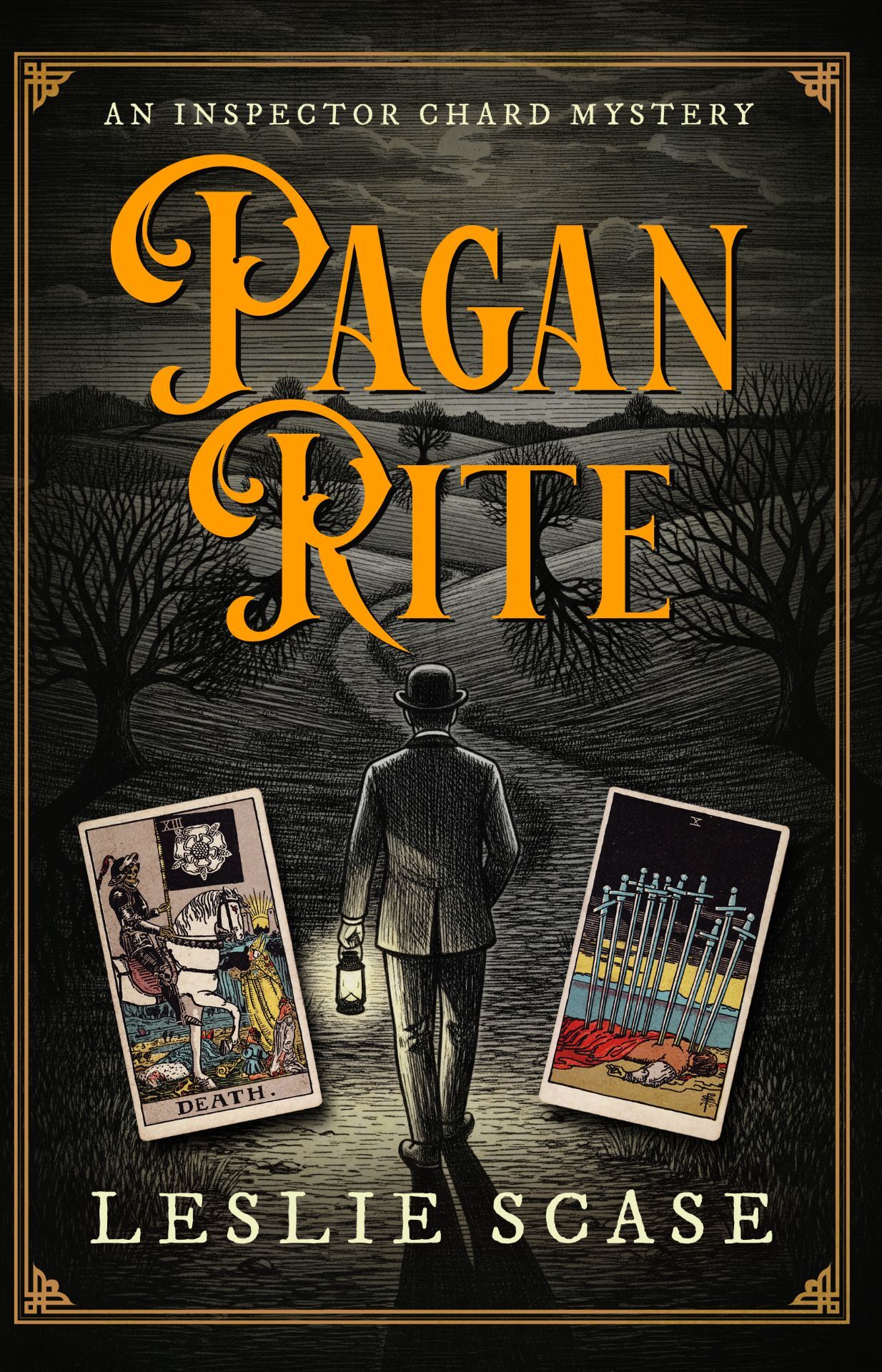
As a fascination for the paranormal sweeps through south Wales can Inspector Chard uncover a serial killer before Queen Victoria’s 1897 Jubilee?Pagan Rite is available now from Vendetta, and you can purchase it here. |
|
Profan-o-Meter: Mild (The odd naughty word here and there) |
|
|
Platelet count: Ugh! (Some parts get pretty squishy) |
|
|
|

|

|
|
|
|
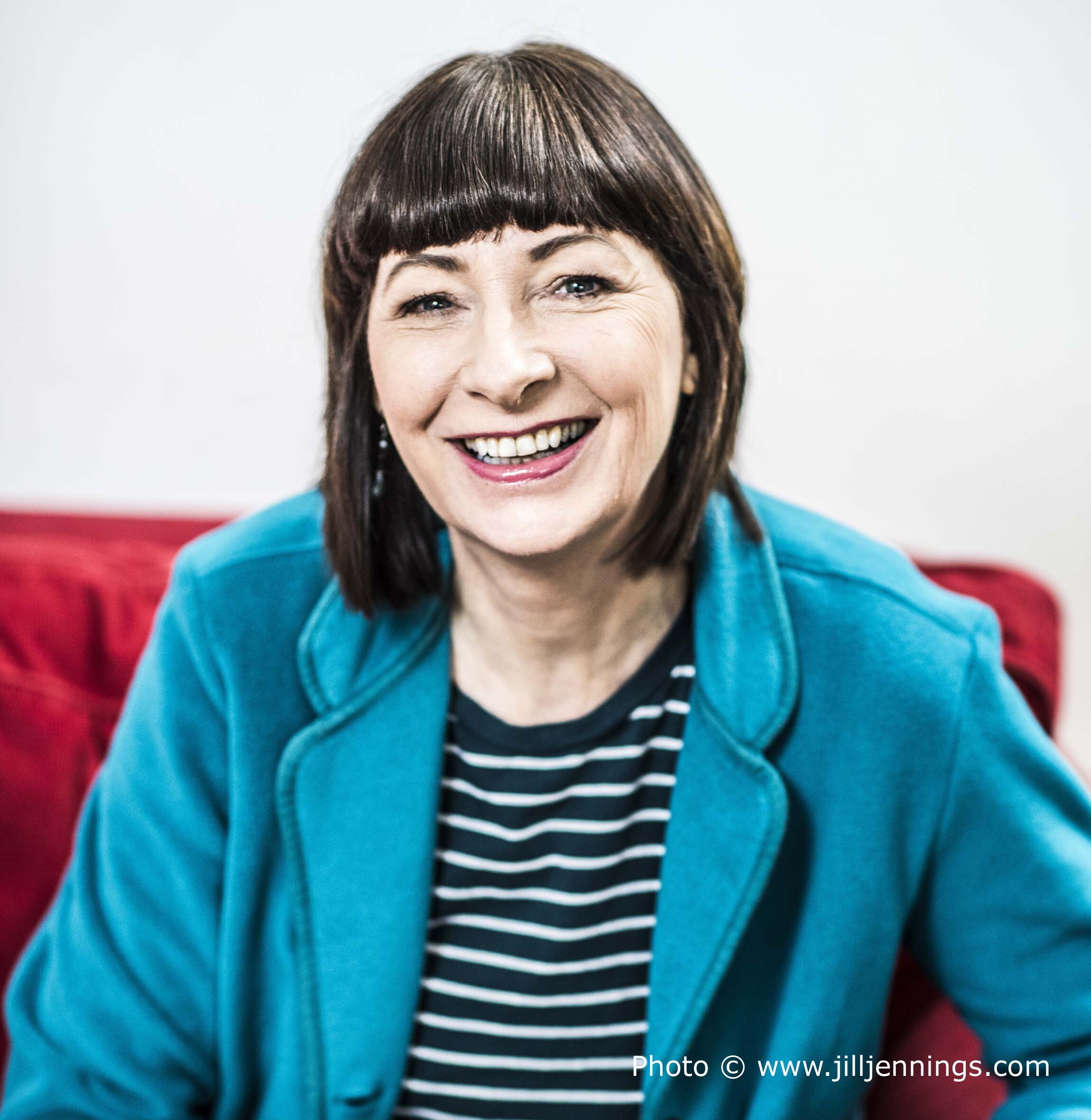
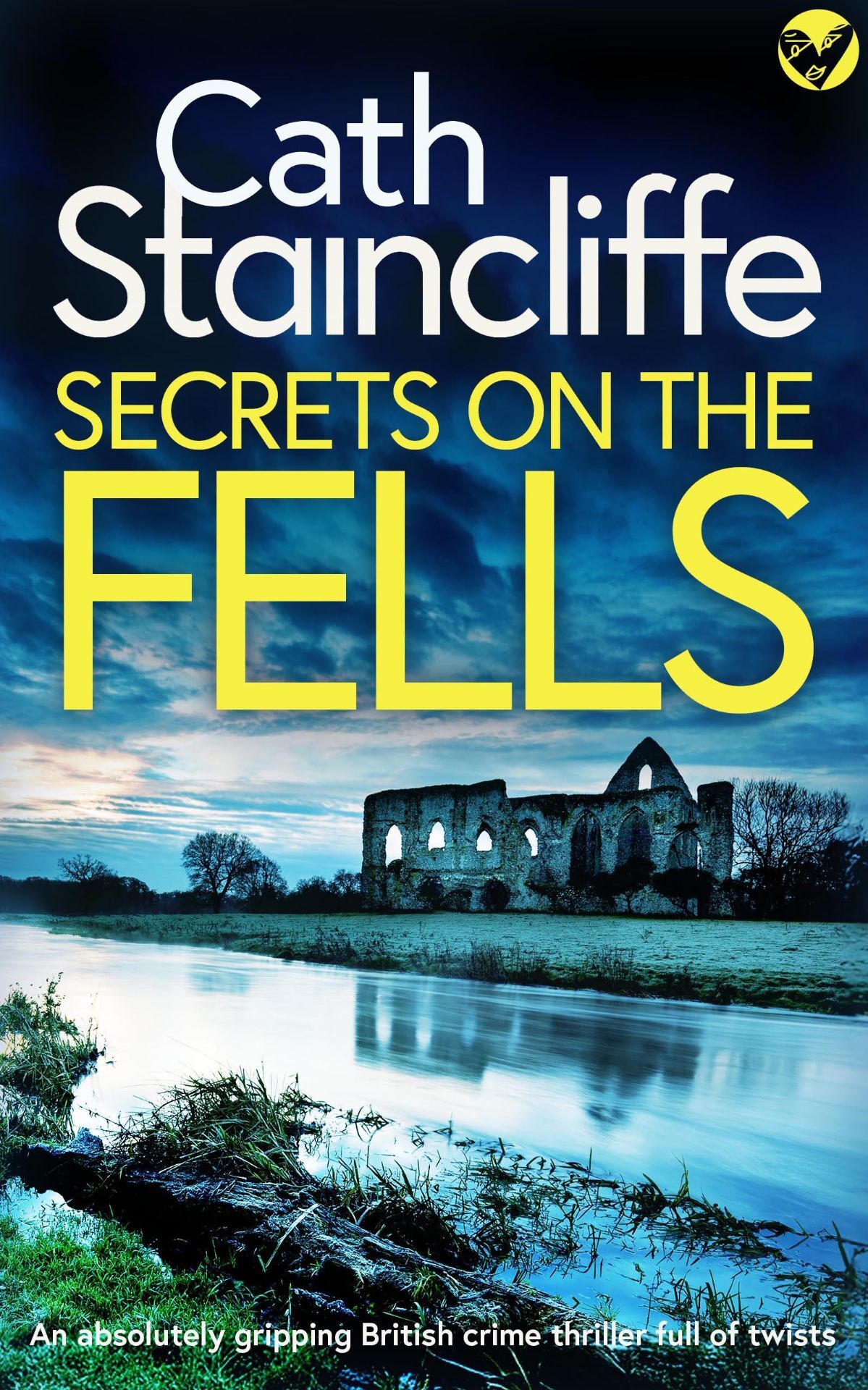
Secrets on the Fells : People and Place Cath Staincliffe
People and place: the two ingredients I need to find my story. The Fells series features veteran detective Leo Donovan and newbie Shan Young. They’re good guys – the sort of police you’d hope to meet if tragedy like this ever struck your loved ones. They have each other’s backs, make each other laugh. Even though the job is harrowing, they look forward every day to working together. The novels are set in the stunning landscape of the Yorkshire Dales. But beyond that, each fresh instalment requires a different location (usually where a body’s discovered) that then leads me to create the people in that victim’s world: their family, friends, colleagues, rivals and enemies.
The Fells (Book 1) took me into the labyrinthine tunnels, potholes, mines and caves that the limestone hills are riddled with when the remains of a young woman are found twenty years after she went missing at a festival. Her mother, her friends and local residents form the cast for that story.
Fire on the Fells (Book 2) was rooted in a very different world; a grouse shooting estate on the moors, during a heatwave, where a young environmentalist is shot dead. The estate staff and its moneyed clients are the people Leo and Shan must investigate.
And Secrets on the Fells (Book 3) out this September was inspired by the magnificent desolation of Fountains Abbey. On a bitter winter’s night dedicated teacher, loving husband and father, Patrick Armitage, lies dying in the ruins, his life blood freezing on the ancient stones. Leo and Shan must uncover the secrets behind his murder among his family, friends, students and adversaries in the small city of Ripon.
After years choosing urban settings (especially Manchester) for my books, recently I’ve wanted to spend more time out in the wilds, savouring the natural world. Research trips to the area, which I’ve known since my Bradford childhood, help me select locations, and determine whether I must invent places to fit my story. (And then include an apology/disclaimer for those readers who might be discombobulated with the sudden appearance of a new village or fresh peak). I can’t start writing until I have worked up the characters. I want to know their appearance, personalities, likes and dislikes, ambitions, secrets and fears. To be able to see and hear them and come up with names that work before I can set events in motion.
I’m a city person and would never want to live up in the Dales or any rural location but I do so like to escape there in my fiction, and have vicarious adventures with Leo and Shan. I hope you will too. Read more about Cath and her books here.
|
|
|
Profan-o-Meter: Spicy (I say, that's some strong language!) |
|
|
Platelet count: Ugh! (Some parts get pretty squishy) |
|
|
|
The Authors’ Licensing and Collecting Society (ALCS) is a not-for-profit organisation started by writers for the benefit of all types of writers. Owned by its members, ALCS collects money due for secondary uses of writers’ work. It is designed to support authors and their creativity; ensure they receive fair payment and see their rights are respected. It promotes and teaches the principles of copyright and campaigns for a fair deal. It represents over 120,000 members, and since 1977 has paid over £650 million to writers. |
|
|

|
Can You Guess Who? (Answers will be shared at the end)
Author 1: Had a walk-on part in the pilot episode of their television series. Swiftly decided to stick to the writing.
Author 2: Author 2 has a really good memory for poems, limericks and song lyrics (and recite or sing them, given a chance, which is possibly quite annoying.)
Author 3: Author 3 has an Olympic Bronze medal for fencing. (The Much Wenlock Olympics that is, the inspiration for the modern Olympics)
Author 4: Author 4 would love to travel the world to ride funiculars… both up and down.
Author 5: Author 5 once had to break into the judge’s chambers at the Old Bailey to satisfy a Sunday People lawyer’s query. A criminal was claiming to have accomplished this and the lawyer refused to let the story be run unless it could be proved feasible.
Author 6: Author 6's PhD thesis involved comparing the writing techniques deployed in Emma Donoghue’s Room with Bertold Brecht’s in Mutter Courage. |
|
|

|
An Introduction Friday Turner
A couple of years ago a friend gave me a book, now out of print, called Ancestral Voices by James Lees Milne. This is based on a diary which Lees Milne kept during the Second World War, when he was employed by the National Trust to visit stately homes whose owners wished to hand them over to the Trust.
Fascinating, waspish, and deliciously indiscreet, this gave me the beginnings of an idea for a novel set in the 1940s about a young woman whose role is to inspect great houses as prospective hospitals and nursing homes for wounded servicemen, but finds, now and then, that she also has a murder to solve.
Thus my heroine, Polly Hope, came into being. She is independent, rather serious, and clever – once, she would certainly have been labelled as a blue-stocking.
I had imagined Polly as carrying out her work independently, but in the very first chapter of the first book she saves the life of a young man, Freddie Fairbank, and Freddie very quickly charmed his way into my story. Polly and Freddie become colleagues, and then friends. Their work takes them to grand country houses - some sinister and dilapidated, some beautiful and romantic, but all intriguing. They must deal with the challenges of wartime, and the intrepid pair will encounter eccentric aristocrats, family secrets, buried scandals, and inevitably more than one mysterious death.
The first of the Polly Hope Mysteries is The Country House Murders, and it will be followed by Murder at Midwinter and A Fatal Invitation.
Read more about Friday and her books here.
|
|
The Country House Murders (first in The Polly Hope Mysteries series): the Second World War, an intrepid heroine, English country houses, and quite a few baffling murders.
The Country House Murders is available from Thomas and Mercer, and you can purchase it here.
|
|
Profan-o-Meter: Harmless (As pure as the driven snow) |
|
|
Platelet count: Eek! (Nothing a plaster couldn’t fix) |
|
|
|
|
|

|
|
|

|
The Day I Took an Escaped Prisoner Back to Jail Tony Bassett
When people learn I spent forty years working as a journalist in Fleet Street, I’m often asked, what were the highlights?
I sometimes mention the Jeremy Thorpe trial; my Sun exclusive about Rolling Stone Bill Wyman marrying teenager Mandy Smith, buying fake MOT certificates for the Sunday People, or finding evidence about Rod Stewart’s secret love child. But the experience I remember the most was the day I took an escaped prisoner back to jail.
It began one day in the 1990s when I spotted a local newspaper story about a well-known East End character, called Mickey Ishmael, an associate of the notorious robber George Davis.
Ishmael had been allowed out of high-security Long Lartin Prison in Evesham, Worcestershire, for a minor hospital operation. The surgery on his nose had proved successful. What had been less successful had been efforts by the prison authorities to get him back afterwards.
I called the Home Office Prison Department and made various other checks before writing a news story about his brief life on the run for the People.
The day after publication, the office received a call from a woman purporting to be Mickey’s girlfriend. She revealed she had begged Mickey to go back and finish his sentence, so they could eventually begin a fresh life together. And she wanted me to take him back.
So, knowing this would make a story for the paper, the following Saturday, photographer David Graves and I set off to see the wanted man. We arrived at a busy Islington pub at two o’clock. We easily located our returning prisoner and his glamorous, blonde girlfriend, expecting the pair to be ready to leave with us right away on our 102-mile journey through the Chilterns and across the Cotswolds.
The only problem was that the wanted man was in no hurry.
Everyone seemed to be either a close friend or a close relative, and each one needed to spend a good while saying their goodbyes.
We finally left at about four o’clock. And that wasn’t the only delay. The old charmer, a renowned ladies’ man, insisted that David should stop his BMW along the A40 road in Acton so that he could buy his sweetheart, sitting on the back seat beside him, a bouquet of flowers.
Hours later, we had nearly reached the Category A men’s prison just outside Evesham, when, from my place in the front passenger seat, I glanced in the side mirror. A police car was behind us and we had just passed signs warning of an accident blackspot.
We had been traveling close to the speed limit – possibly exceeding it. My heart was in my mouth. If we were stopped, how would we explain having an escaped prisoner in the back?
Luckily, just minutes later, we turned into the lane leading to the prison, and the police car continued its journey. We had to give the infatuated couple a few minutes together, saying their farewells, before we watched the dejected man walk slowly off to the entrance.
Read more about Tony and his books here. |
|
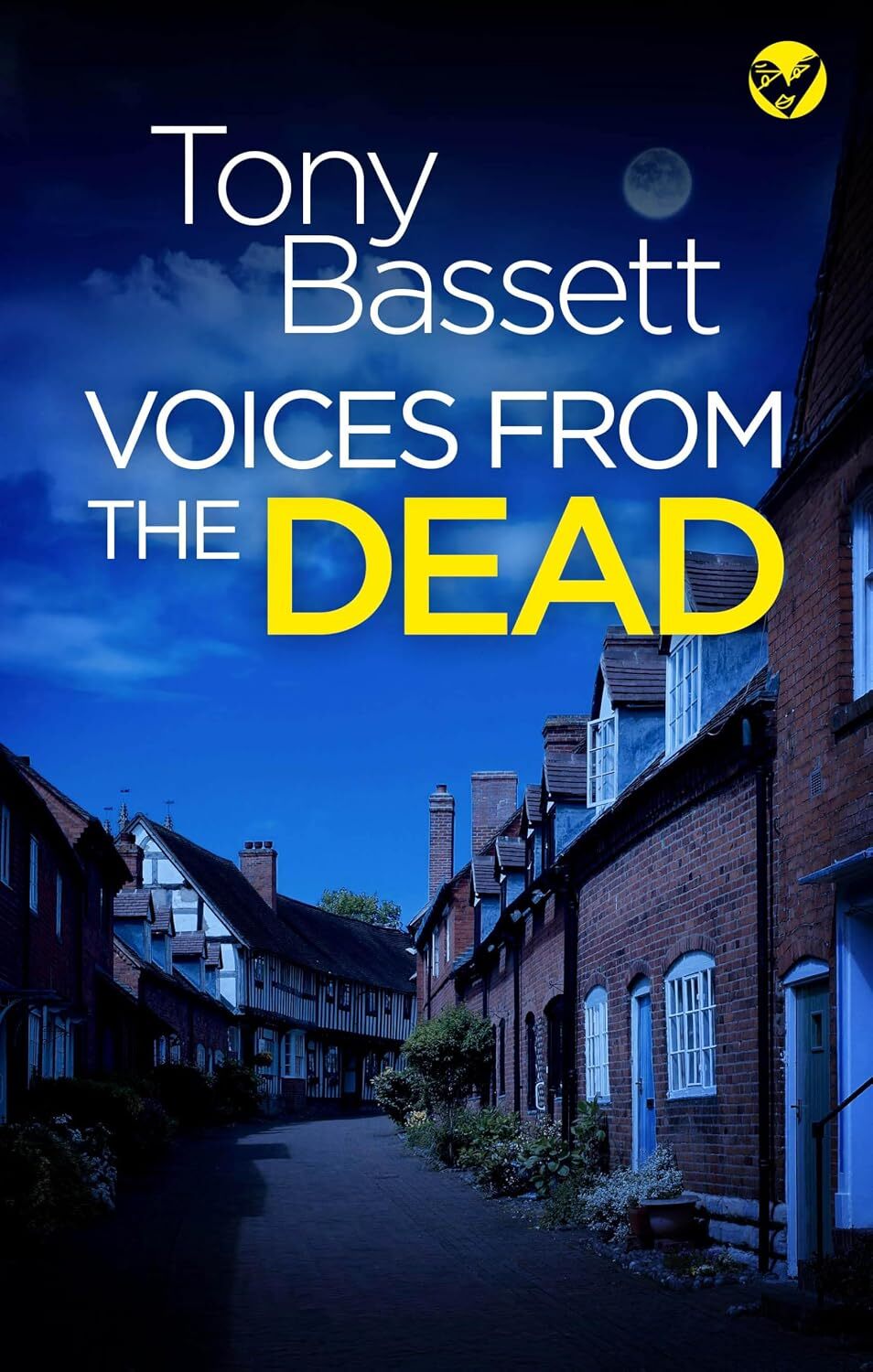
A murder mystery about a beauty influencer found strangled in a hotel. A married woman was staying with a boyfriend. So is her husband behind er murder, or is the killer her friend's boyfriend, who has been threatening her? A second murder at first seems unconnected. But is it?
Voices from the Dead is available now from The Book Folks, and you can purchase it here. |
|
Profan-o-Meter: Mild (The odd naughty word here and there) |
|
|
Platelet count: Ugh! (Some parts get pretty squishy) |
|
|
|
|
|
|
|
|
|
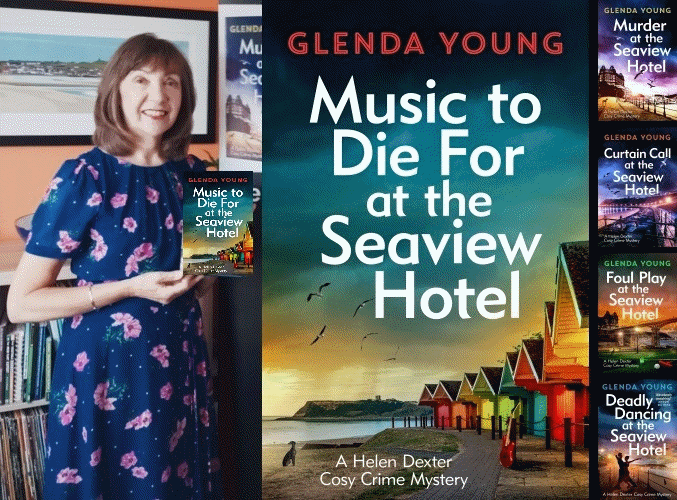
Putting the Band Back Together...Then Killing One of Them Off Glenda Young
When lockdown hit, I turned to crime. Stuck at home during Covid, my imagination travelled instead to my happy place of the seaside town of Scarborough on the Yorkshire coast. Then the murders began. The result was my first cosy crime, Murder at the Seaview Hotel.
It stars 12 Elvis impersonators called Twelvis, who arrive in town for an Elvis fan convention. However, one of the Elvis impersonators is killed and his blue suede shoes are stolen. Amateur sleuth Helen Dexter, owner of the Seaview Hotel, with her rescue greyhound Suki, cook Jean (a Yorkshire woman of a certain age who you mess with at your peril) and cleaner Sally, solve the crimes.
I thought the book would be a one-off lockdown project, but my publisher, Headline, loved it and asked me to turn it into the start of a series. Now there are four books in the Seaview Hotel series. After Twelvis, there’s a highly-strung troupe of actors in Curtain Call at the Seaview Hotel. Then obsessive crazy golfers in Foul Play at the Seaview Hotel. Then a team of amateur ballroom dancers in Deadly Dancing at the Seaview Hotel. Strictly Come Dancing’s Anton du Beke read that book and said: 'I loved Glenda's book and her characters - perfect for all fans of dance, mystery and cosy escapism. Absolutely smashing!' My cosy crimes went on to be shortlisted for Best New Crime Series in the New Kid on the Block Award with bestselling series by Richard Osman and Val McDermid in the Dead Good Readers Awards at Harrogate crime festival. This, as you can imagine, puts a smile on my face and a spring in my step every single day!
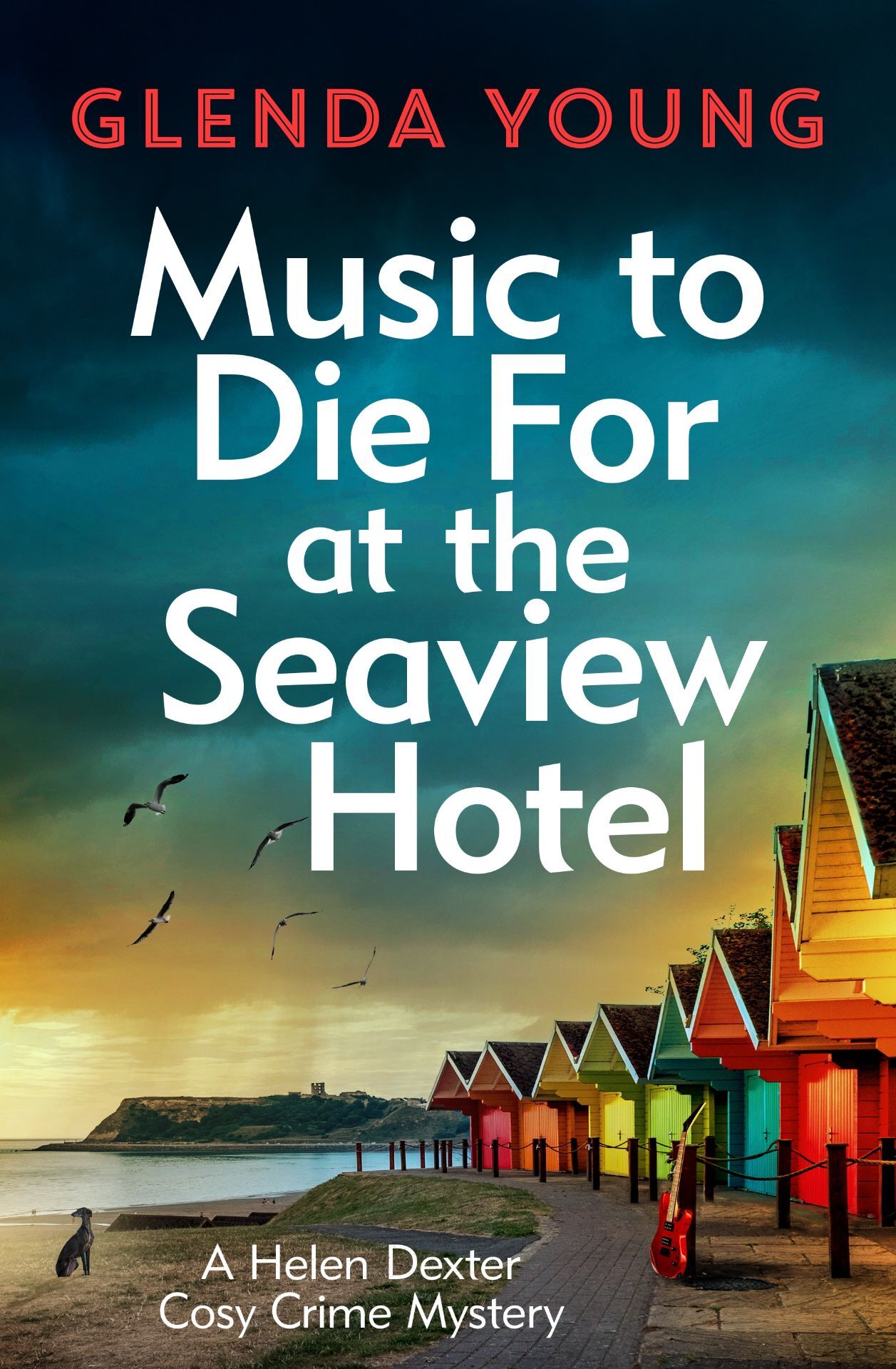
And now the fifth book in the series is released in September. Music to Die For at the Seaview Hotel stars eighties pop band The A64, who reunite for the gig of a lifetime at Scarborough's Open Air Theatre.
Helen Dexter is overjoyed when they book into her Seaview Hotel. However, as old tensions rise within the band, it's clear each musician has something to hide. Why is lead singer Starr running away from her past? Why is Pete the drummer secretive about where he's been for the last forty years? And when guitarist Dave breaks his legs in a freak window-cleaning accident, a new guitarist arrives, causing more discord. Then, as the band rehearse for their comeback gig, a dead
Read more about Glenda and her books here. |
|
|
Profan-o-Meter: Mild (The odd naughty word here and there) |
|
|
Platelet count: Eek! (Nothing a plaster couldn’t fix) |
|
|
|
Do You Have a Story to Tell? Two writing contests are now open, and both have fabulous prizes!
|
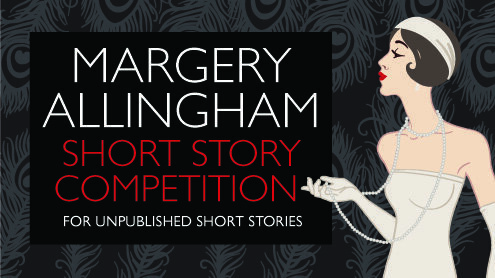
The Margery Allingham Short Mystery Competition awards the best short mystery -- 3,500 words or less -- that fulfills Margery Allingham's definition of mystery. That is: The Mystery remains box-shaped, at once a prison and a refuge. Its four walls are, roughly, a Crime, a Mystery, an Enquiry and a Conclusion with an Element of Satisfaction in it.The contest is open to both published and unpublished authors, however the story itself must be unpublished (and written in English). Prizes include £500 cash and one year's membership in the Crime Writers' Association. Deadline: 29 January 2027. You can find more information here. |

|
The Emerging Author Dagger is a contest for unpublished, unagented writers currently working on a crime novel. Sponsored by Fiction Feedback Literary Consultancy, the contest judges the first 3,000 words of a crime novel and a 1,500 word synopsis. The deadline is 29 January 2027. Prizes include £500 cash and one year's membership in the Crime Writers' Association. In addition, shortlisted entries are sent to agents and publishers who have asked to see them. For more information, see this page. |

|
True crime writers Sarah Bax Horton and Robin Jarossi are doing a joint event at the Chelsea History Festival on the afternoon of 1st October about London serial killers the Thames Torso and Blackout Killers. The Blackout and Thames Torso Killers are two of the most notable murderers of modern times. Sadistic and mercurial, each criminal eluded detectives while triggering panic in central London. Robin Jarossi and Sarah Bax Horton reveal how those very different series of crimes were investigated and finally solved. Join them at the National Army Museum for a true crime panel and book signing of Arm of Eve and Force of Darkness. Tickets are £15.00 each, and you can book yours here. |
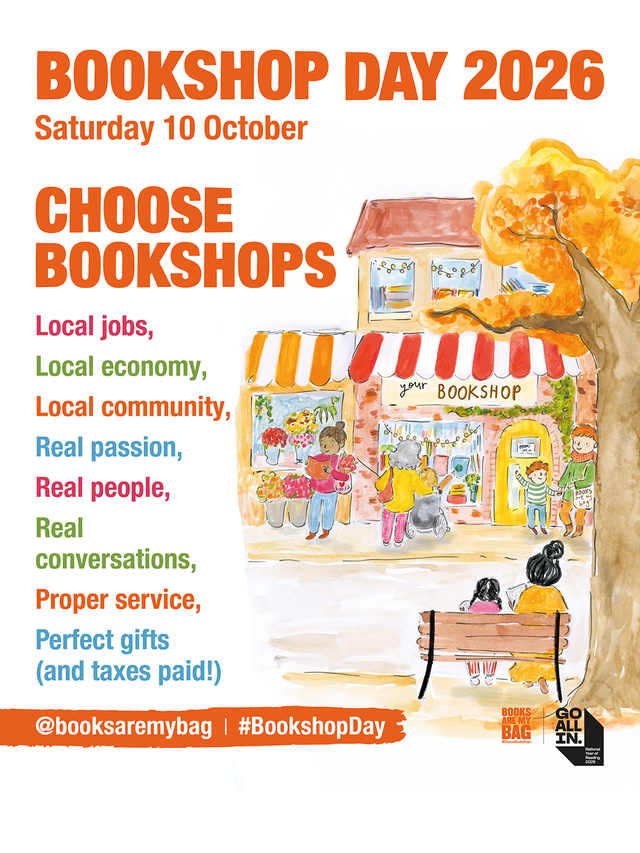
October 10 is Bookshop Day! Visit your local bookshop! And authors, if you're having an event at a bookshop, share it on social media and make sure to tag in @booksaremybag and use the tag #BookshopDay
|
|
|
|
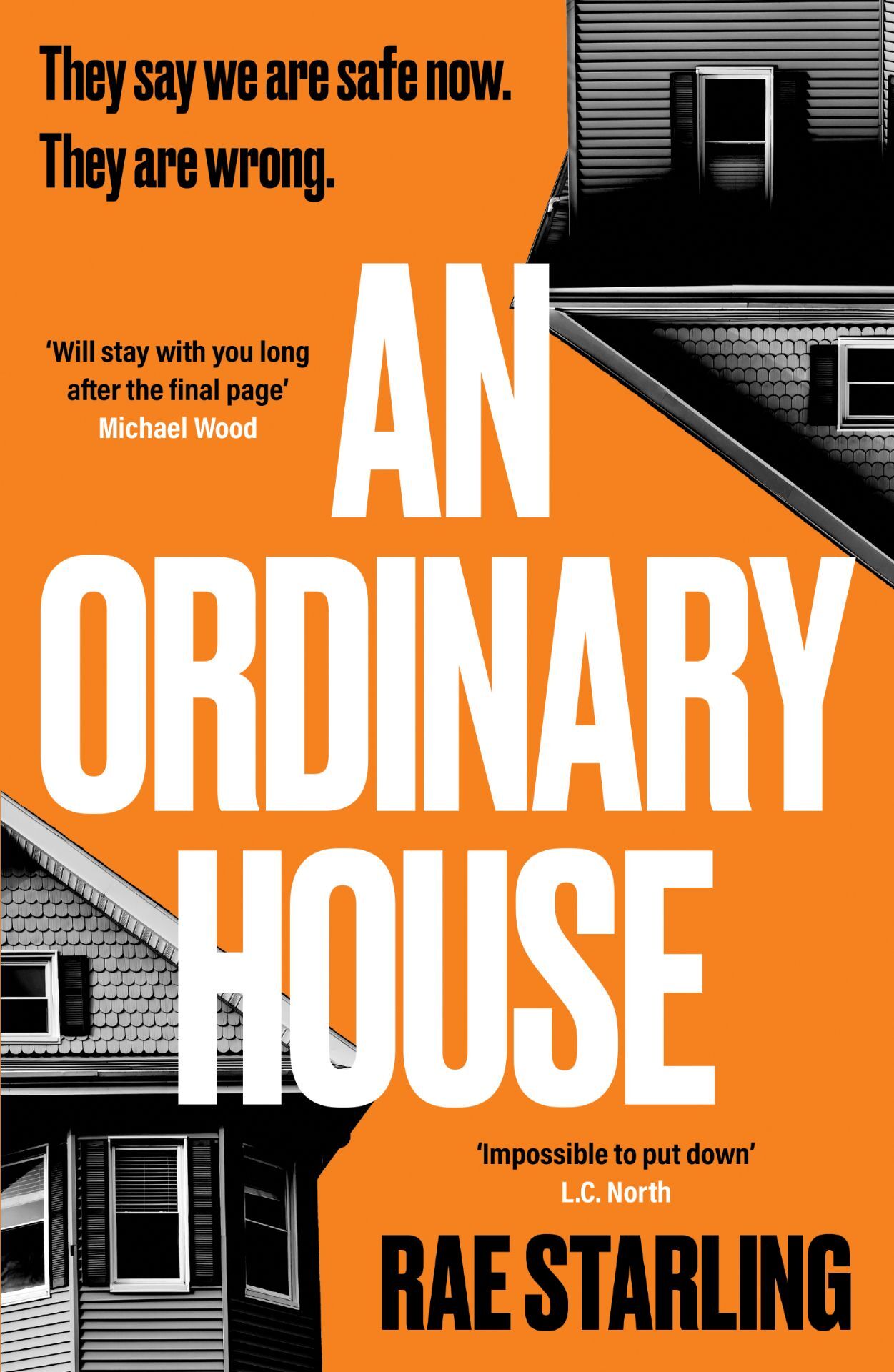
An Ordinary House Rae Starling
In August 2006, Austrian teenager Natascha Kampusch escaped from the man who had abducted her eight years earlier. This extraordinary news story drew the interest of TV channels across the world. Natascha Kampusch’s first interview for ORF, the Austrian national broadcaster, was aired in full in ten countries, and excerpts were shown in another one hundred and twenty.
However, the initially sympathetic reporting soon turned against the teenager. In her article ‘The Girl in the Cellar: Media Representations of Natascha Kampusch’, Fairleigh Gilmour argues that Kampusch received negative press because she did not present as the expected stereotype of a victim but instead asserted her independence and spoke candidly about her abductor. In her analysis of 355 newspaper articles in 21 English language newspapers from 2006 to 2010, Gilmour notes the frequency with which four narrative angles to refer to Natascha Kampusch are used: the ‘mad’ woman (28%); the ‘bad’ woman (15%); the ‘sex slave’ (19%); and the ‘virgin bride’ (16%).
In her first memoir, 3096 Days, Natascha Kampusch eloquently contests each of these stereotypes. In her second memoir, 10 Years of Freedom, she itemises incidents of ongoing media intrusion and unwelcome attention from the public. These memoirs, together with the Gilmour article, inspired me to write my thriller An Ordinary House. Although I wouldn’t attempt to speak for real-life survivors, I wanted to show through fiction how an individual's experience might be rewritten by the media.
In An Ordinary House, a traumatised teenager (named Scholar) finds his story sensationalised after rescue from years locked in a suburban house. Ambitious journalist, Kim Steel, hounds not only Scholar but also his foster parent (Scarlet Sue), his lawyer and the detective in charge, twisting whatever she gleans to make the best clickbait headlines. And alongside each of Kim’s attention-grabbing stories are the cruel and inaccurate social media comments of keyboard warriors, who follow the case for entertainment. As well as navigating lurid news articles and false allegations, Scholar must suppress nightmarish memories of his ordeal to stop himself spiraling out of control. Read more about Rae and her books here.
|
|
They say we are safe now. They are wrong. An Ordinary House is a haunting and horrifying thriller.
An Ordinary House is available now from Hera Books, and you can purchase it here. |
|
Profan-o-Meter: Spicy (There is some strong language) |
|
|
Platelet count: There is some on-page violence |
|
|
|
We asked this month's authors, what's the book that's so great you wish you had written it? Here are their answers.
Leslie Scase: The Red Hill by David Penny
Cath Staincliffe: Good People by Patmeena Sabit
Rae Starling: The Shame by Maureen Myant
Friday Turner: The Date by T H Murdoch
Tony Bassett: Strangers On A Train by Patricia Highsmith
Glenda Young: The Perfect Son by Freida McFadden
|
|
Can You Guess Who? Answers
Author 1: Cath Staincliffe
Author 2: Friday Turner
Author 3: Leslie Scase
Author 4: Glenda Young
Author 5: Tony Bassett
Author 6: Rae Starling
|
|
|