|
|
Central Water Line Construction Update |
Exciting things are underway for the Central Water Line project. In this update, we'll talk about the closing out of Stage 1, current work on JPA, installing pipe under the railroad tracks, and the upcoming anticipated construction activity on Cherry Avenue. |
With paving efforts currently underway, construction in Stage 1 is almost finished. |
Stage 1 is Nearing Completion!Lewis Street, Price Avenue, Piedmont Avenue, and Stadium Road |
Construction continues to make strong progress on the Central Water Line Project as Stage 1 work nears completion. Our contractor, Sagres Construction, has been working diligently to install new 30-inch ductile iron water pipe along Hereford Drive, Stadium Road, Piedmont Avenue, Price Avenue, and Lewis Street. Pipe installation for Stage 1 is now complete, marking a major milestone for the project. |
|
To ensure the integrity of the newly installed water line, crews performed a pressure test by filling the pipe with water and pressurizing it to 200 psi. The pressure was required to hold steady for two hours in order to pass the test, confirming that no leaks were present in the new pipeline. We are pleased to report that the pressure test was successfully completed on May 5.
With underground utility work complete, crews also began restoring areas impacted during construction. Concrete restoration efforts included repairing and replacing curbs, sidewalks, and other concrete features that were disrupted during pipe installation. These improvements help restore pedestrian access and improve the overall appearance and functionality of the corridor.
Crews have also moved forward with permanent pavement restoration. This work includes milling away the old pavement surface and installing new asphalt along the construction corridor. Paving work has already been completed on Hereford Drive and Stadium Road, with work scheduled to continue next week on Piedmont Avenue, Price Avenue, and Lewis Street. Once paving operations are complete, crews will begin final line striping. |
|
|
To ensure the integrity of the newly installed water line, a pressure test was performed. This process incudes filling the new pipe with water and pressurizing it to at least 200 psi. The pressure must hold for a minimum of two hours. |
With underground utility work complete, concrete restoration efforts began. Sidewalks, curbs, and other concrete features that were disrupted during construction were replaced. |
|
|
|
Fresh pavement was laid on Stadium Road. [Photo Credits: Hayden Johnson] |
Jefferson Park AvenueStage 2 work is making its way down JPA |
Work has progressed into Stage 2 of the project. Crews began construction activities on private property just south of the railroad tracks and have since advanced onto Jefferson Park Avenue. |
|
Crews install an air release vault on Jefferson Park Avenue. |
|
|
While the project team had originally hoped to maintain two-way traffic within the northbound lane of Jefferson Park Avenue, site conditions have required adjustments to the traffic control setup. Flagging operations are now in place to provide larger vehicles with additional room to safely navigate across the median and through the work zone. Motorists are encouraged to use caution, expect minor delays, and follow directions from on-site traffic control personnel as construction continues. |
|
|
|
When Trenching Isn't FeasibleRailroads Pose Unique Challenges |
Because railroad corridors are often critical transportation routes, traditional open trench excavation is not an option. Excavating across the tracks would require removing sections of rail and disrupting rail operations, creating potential safety concerns and service interruptions. Instead, crews use a specialized construction method known as “jack and bore.”
The jack and bore process allows crews to install pipe underground without disturbing the surface above. The process begins with the construction of a launch pit on one side of the railroad tracks and a receiving pit on the opposite side. From the launch pit, a large steel casing pipe is hydraulically pushed, or “jacked,” through the ground while a rotating cutting head removes soil from inside the pipe. As excavation progresses, additional sections of casing pipe are added until the bore reaches the receiving pit. |
The jack and bore method was used on RWSA's Meadowcreek Interceptor project back in 2010. |
Once the steel casing is fully installed beneath the railroad tracks, the new water pipe is inserted inside the casing. The casing provides structural protection for the carrier pipe and helps isolate the water line from external soil pressures and vibrations generated by railroad traffic above.
Using the jack and bore method minimizes impacts to rail operations, reduces surface disruption, and improves safety for both construction crews and the public. While the process is more specialized and time-intensive than traditional trench excavation, it is one of the safest and most effective ways to install underground utilities beneath active railroad infrastructure.
The Central Water Line will have two railroad crossings that will use this method of installation. The first area is planned just south of Lewis Street between Stages 1 and 2. The second location will happen in Stage 9 near East Water Street. Scheduling of this work is still underway. |
|
Join us for a Public Information Session!Work to Begin in the Fifeville Neighborhood |
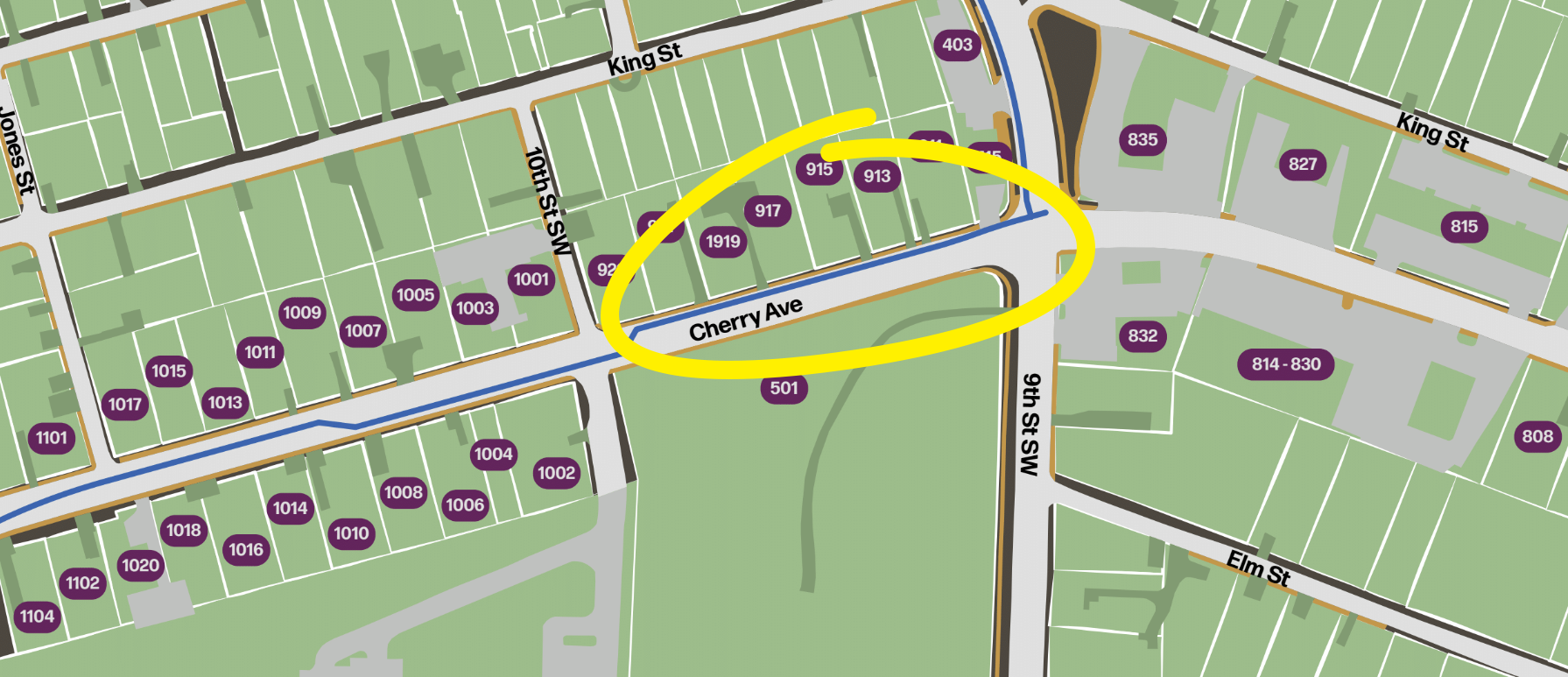
Our contractor has notified us that a second construction crew is expected to begin work in June to help advance progress on the project. This additional crew will start near the intersection of Cherry Avenue and Roosevelt Brown Boulevard and will work westward along the corridor.
Maintenance of traffic plans are currently being developed to support this upcoming phase of construction. Additional details regarding traffic impacts, lane closures, and access changes will be shared with the community as soon as they become available. |
|
To help inform Fifeville residents and nearby stakeholders about the upcoming work, a Public Information Session has been scheduled for June 2 at 6:00 PM at the Albemarle County Office Building located off of 5th Street Extended. Community members may attend either in person or remotely. Those wishing to participate virtually can join via Zoom.
A recording of the session will also be made available afterward for anyone unable to attend. |
|
|
Public Information Session Fifeville Residents
When June 2, 2026, at 6:00 PM
Where Albemarle County Office Building Room A 1600 5th Street Ext Charlottesville, VA 22902
Online
|
|
|
|
Central Water Line Project is One of Several Initiatives Planned |
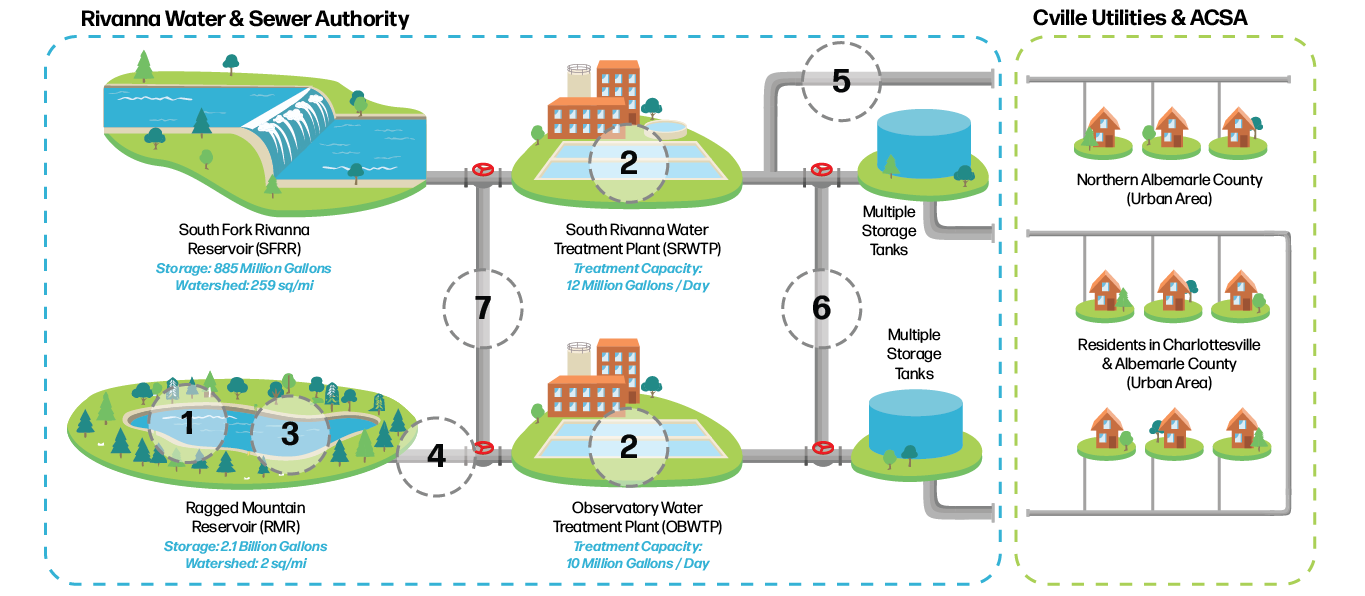
In 2002, the Central Virginia Region experienced a historical drought of record. This drought and the water supply needs of the Charlottesville/Albemarle region sparked a decade-long water supply planning process (2002-2012). Over the next five years, RWSA will invest more than $300 million to enhance our urban raw water storage capabilities, raw water transmission pipelines, treatment facilities, and finished water transmission pipelines (treated drinking water). |
|
New Earthen Dam – In 2014, RWSA completed building a new dam at the Ragged Mountain Reservoir. Water Treatment Plant Improvements - Recent facility renovations and upgrades have increased treatment capacity. South Rivanna River Crossing - A large 24” finished water transmission pipe is being added to better support the northern area in Albemarle County. Central Water Line - The Central Water Line will provide a high-flow, large-diameter finished water transmission pipe that will better connect RWSA’s treatment facilities, transmission pipes, water storage tanks, and water distribution piping in the urban area.
|
|
|
|
|