My husband and I went to the Kansas City Symphony this weekend. Going to the symphony is one of those indulgent treats we only get to do once a year or so, when we notice that the symphony is playing a piece one or both of us particularly loves. This time around, my husband was excited to hear Stravinsky's "The Rite of Spring," so off we went.
That night, two excellent things happened to me at the Kauffman Center for the Performing Arts. The less exciting of the two was that I got an idea for a new book, which I have filed away for later examination. The true highlight, though, was that I witnessed the sublime.
I don't want to mislead you into believing that I know a damn thing about music, because I do not. But I do recognize great art when great art crosses my path, and on Saturday night, that great art came in the form of Mendelssohn's Concerto in E Minor for Violin and Orchestra or, more specifically, in the form of violinist Augustin Hadelich. Oh, my God.
Oh, my God.
Listen, I have been to many plays and operas and symphonies and ballets and so forth in my life, but I have never been transported by a live performance the way I was on October 3 at the Kauffman Center for the Performing Arts. I have never seen one human being so completely hold an audience in his hands the way Augustin Hadelich did. I wish I could tell you exactly what it was about Hadelich's playing that so moved me, but I can't.
And this has me thinking about art in general and the nature of the sublime. At what point does art become transformational? How and why does art created by one (or more) person(s) profoundly touch the soul of another?
Let's go back to Hadelich for a moment. I lack the words to describe the sublimity of his performance precisely because the music--his playing of it--speaks for itself. Does that make sense? Let me put it another way: I hate it when I'm supposed to cough up an "elevator pitch" for one of my books. Yes, yes, I understand that it's very important for marketing purposes and blah blah blah, but the thing is, if I could have told the story in thirty seconds, I would have. Trust me, that would have been so much easier than writing the book. But the book is the book because that is the only way I could tell the story, the only way I could have created that particular work of art. Basically, the book speaks for itself; there's no point in trying to explain it any other way.
But great art is more than that. Anyone can create art. Personally, I think everyone should; creating is good for the spirit and for humanity in general. But what elevates the work into something transformational? There's the obvious combination of talent and skill and discipline, but even though that combination is rare, statistically speaking, there are still lots of people who have the talent and skill and discipline to succeed at a professional level in their field. So what makes Hadelich stand out?
No really, I'm asking. What makes someone like Augustin Hadelich stand out beyond the gobsmacking talent and skill and discipline? Feel free to offer me your two cents, because I'm on a learning journey here.
I suspect the answer has something to do with the self or, more accurately, transcending the self. Listening to Hadelich's playing, I got the distinct sense that he was serving the music above all else, that the music was the point rather than his playing of it. This is so much harder to do than it sounds. In a world full of book reviews and bestsellers lists and awards, I find it extremely challenging to create art for art's sake. Isn't the purpose of art to connect on some deep, ineffably human level with someone else? How do I take the self--the ego--out of that? Because at the end of the day, I think that's what you have to do, to let the art speak while you take yourself--your self--out of it.
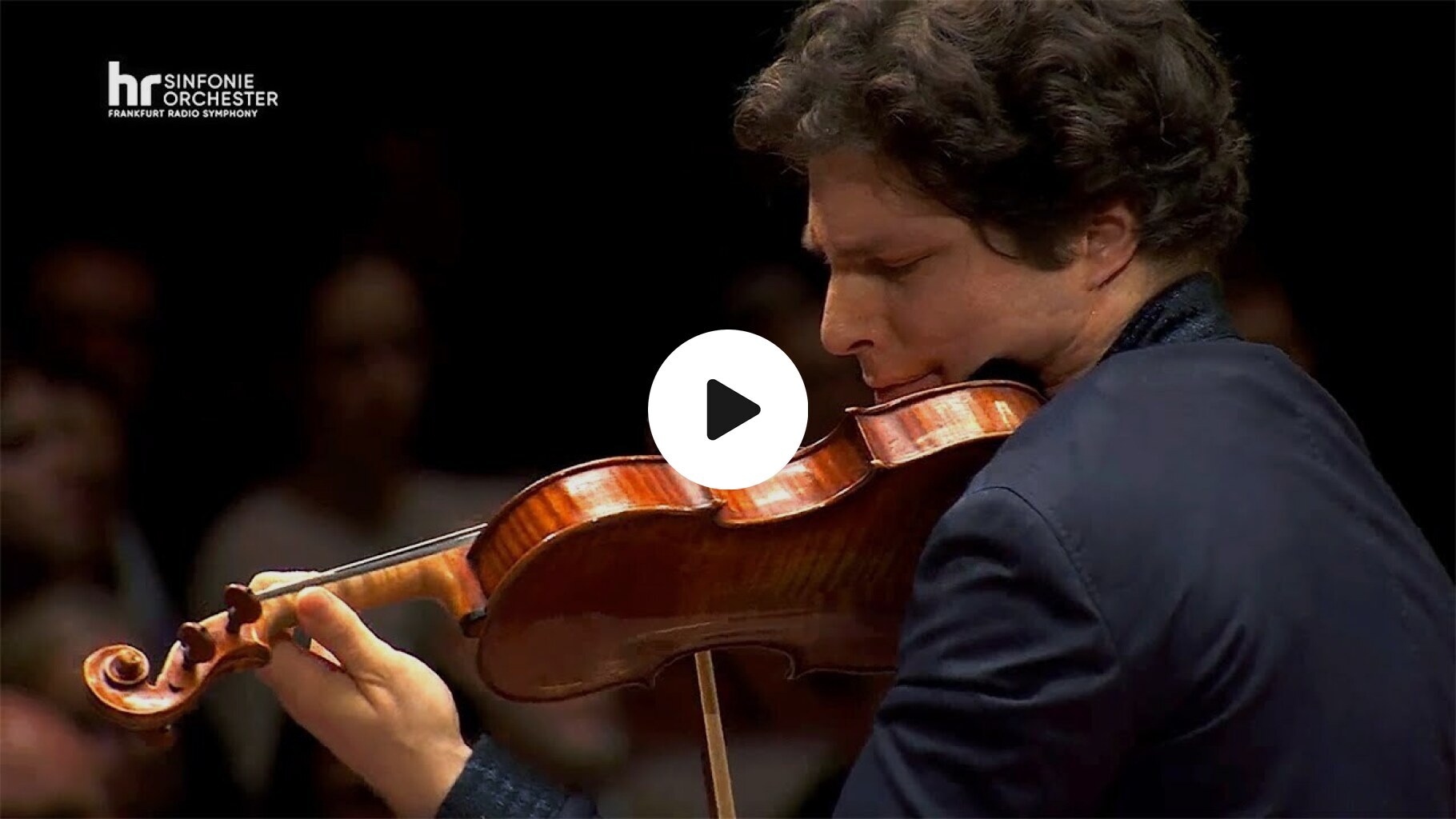
Well, that was a ramble, wasn't it? Anyway, here is Augustin Hadelich playing Mendelssohn's Concerto in E Minor for Violin and Orchestra. It's not the same as hearing him play live and in person, but you get the picture.